The Global Rate Cycle Has
Stopped Moving As One.
Monetary easing is colliding
with persistent inflation, fiscal
pressure, and elevated long-term
yields—creating a fragmented
cost of capital across economies.
The brief
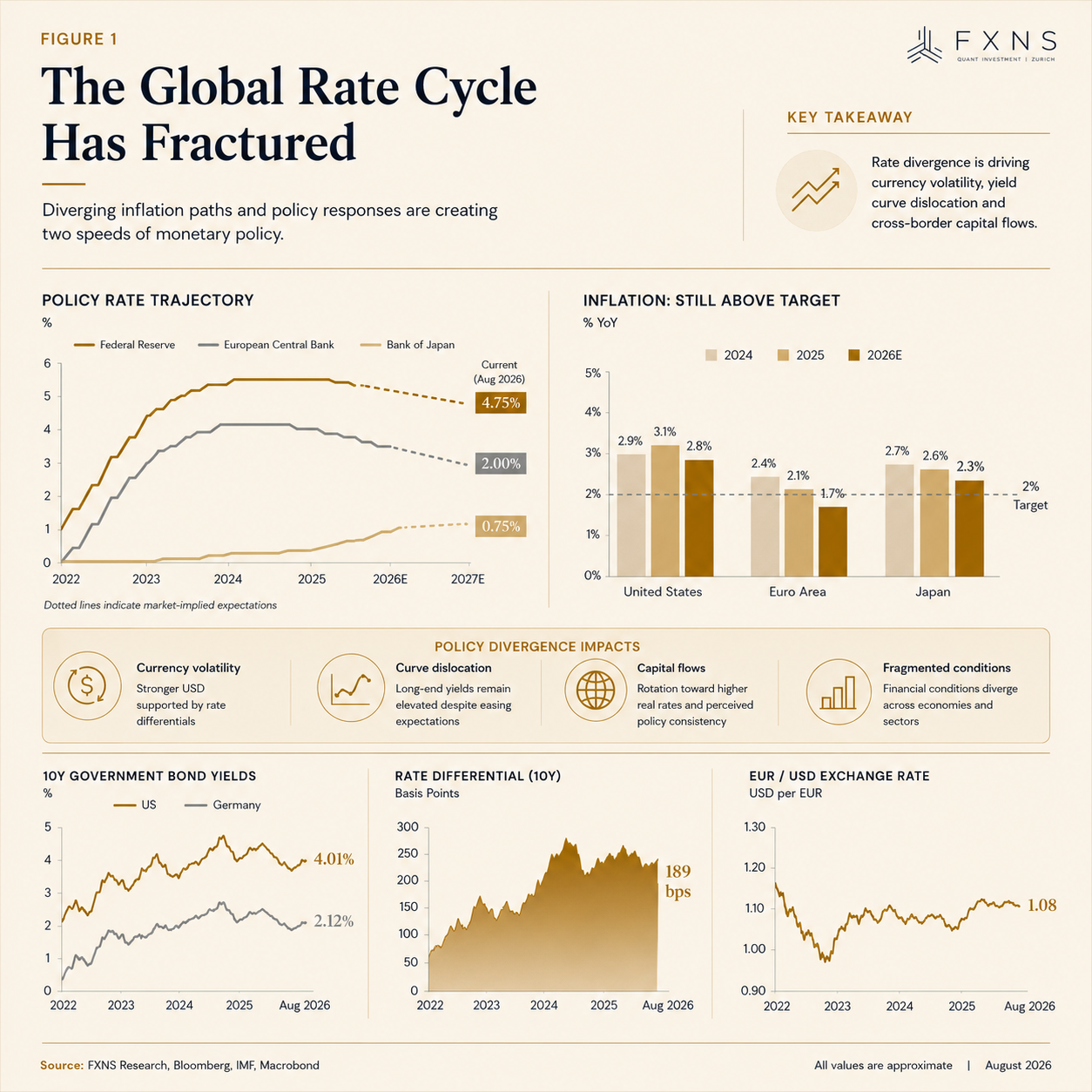
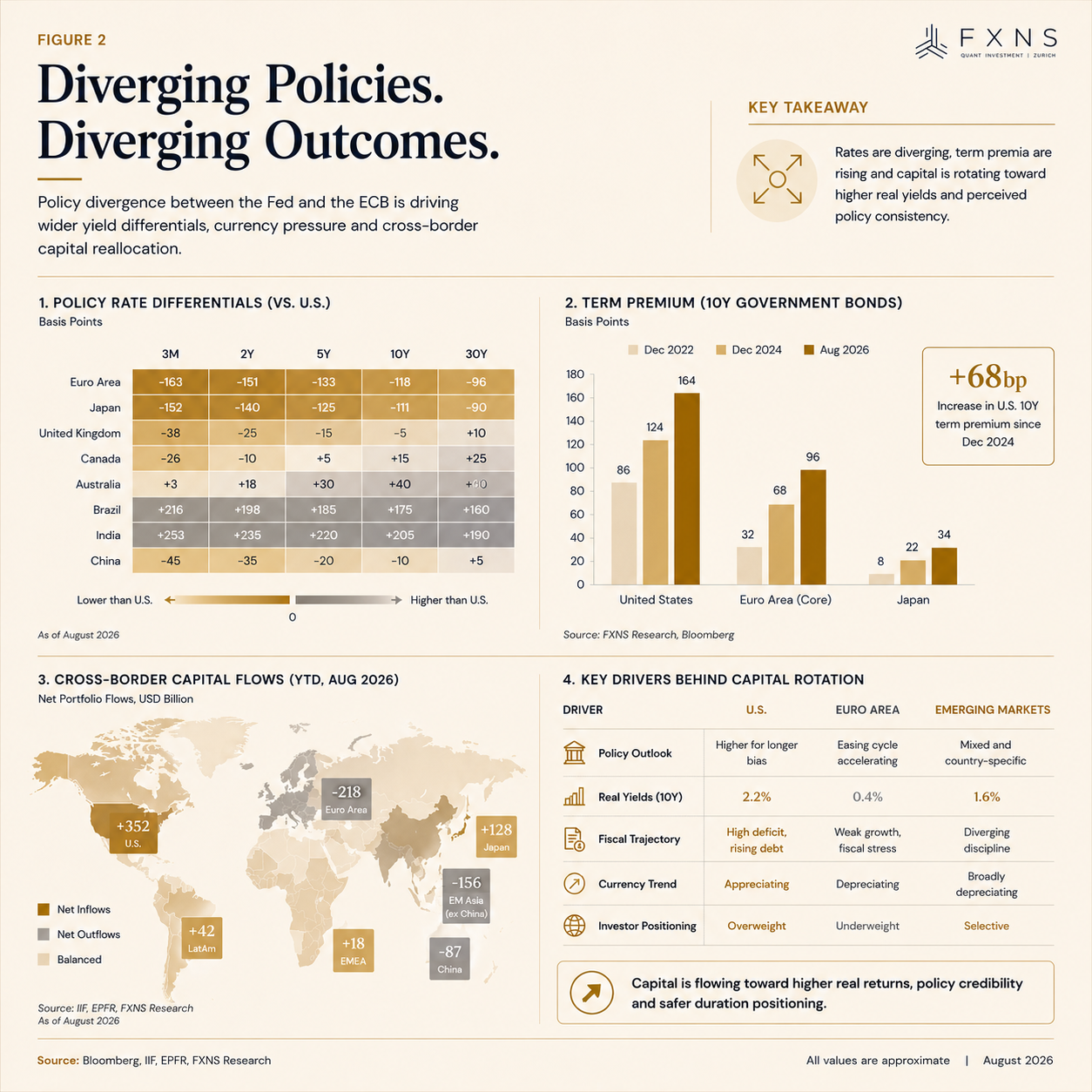
The first eight months of 2026 have challenged the idea of a synchronized global easing cycle. Diverging inflation dynamics and economic momentum have pushed the Federal Reserve and the European Central Bank onto increasingly different policy paths, reshaping rate differentials, currencies and cross-border capital allocation.
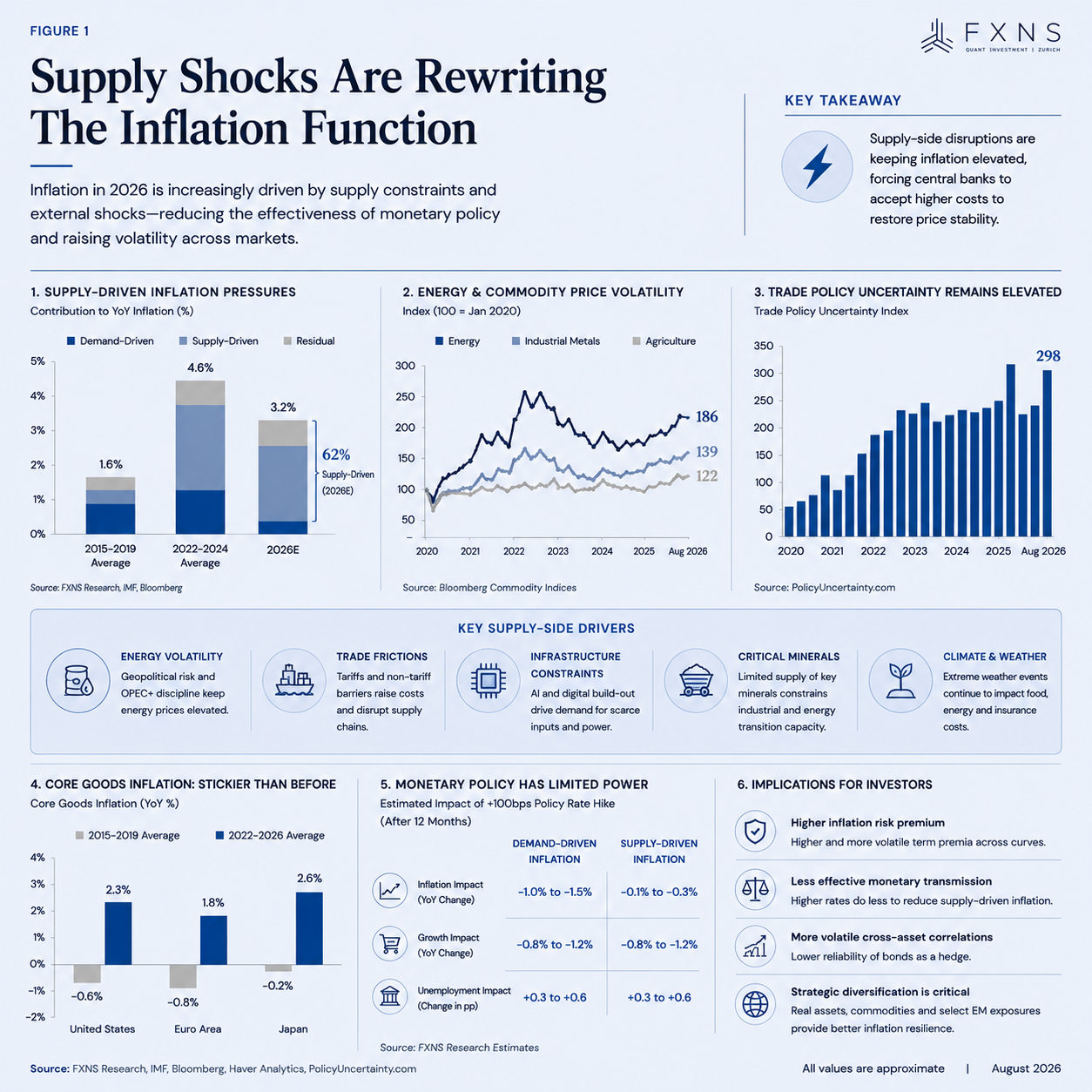
At the same time, renewed supply-side pressures—from energy volatility and trade frictions to infrastructure-intensive investment—have complicated the inflation outlook. Central banks are no longer responding to a common demand cycle, but to increasingly different combinations of growth, inflation and external shocks.
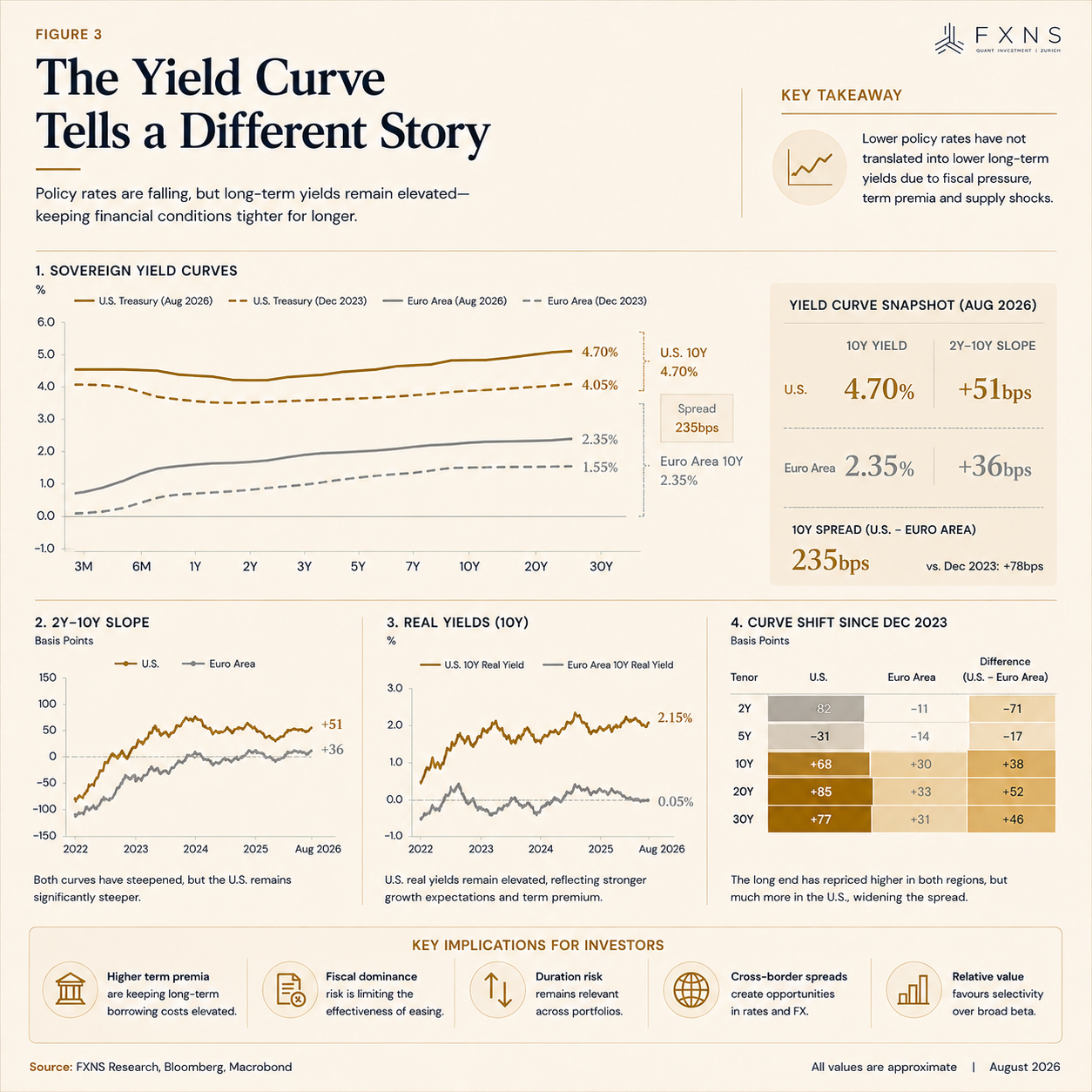
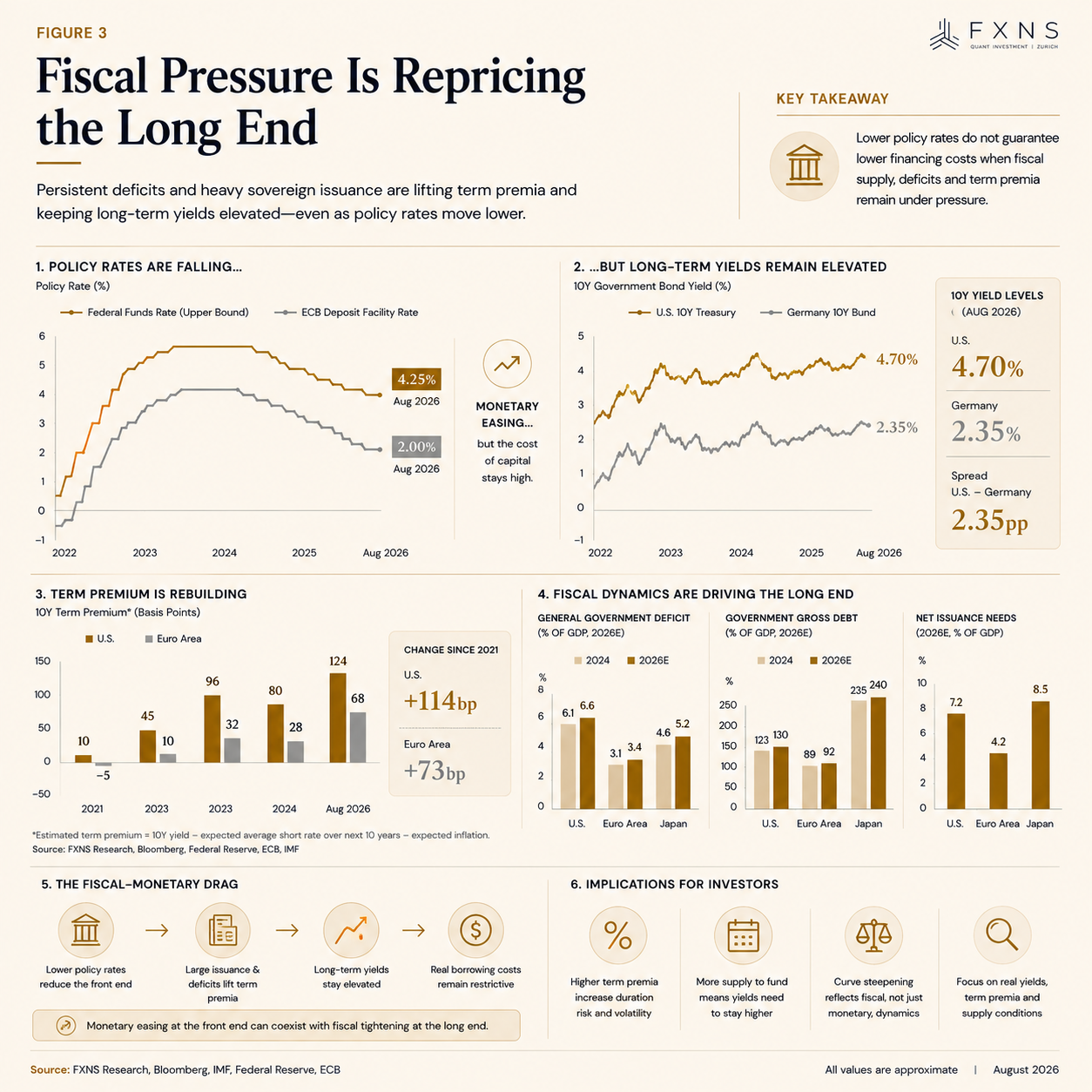
Most importantly, lower policy rates have not translated uniformly into lower financing costs. Heavy sovereign issuance, persistent fiscal deficits and elevated term premia are keeping the long end of government curves under pressure, creating a Fiscal-Monetary Drag that limits the transmission of monetary easing into the real economy.
RESEARCH FOCUS
Federal Reserve vs. ECB policy divergence
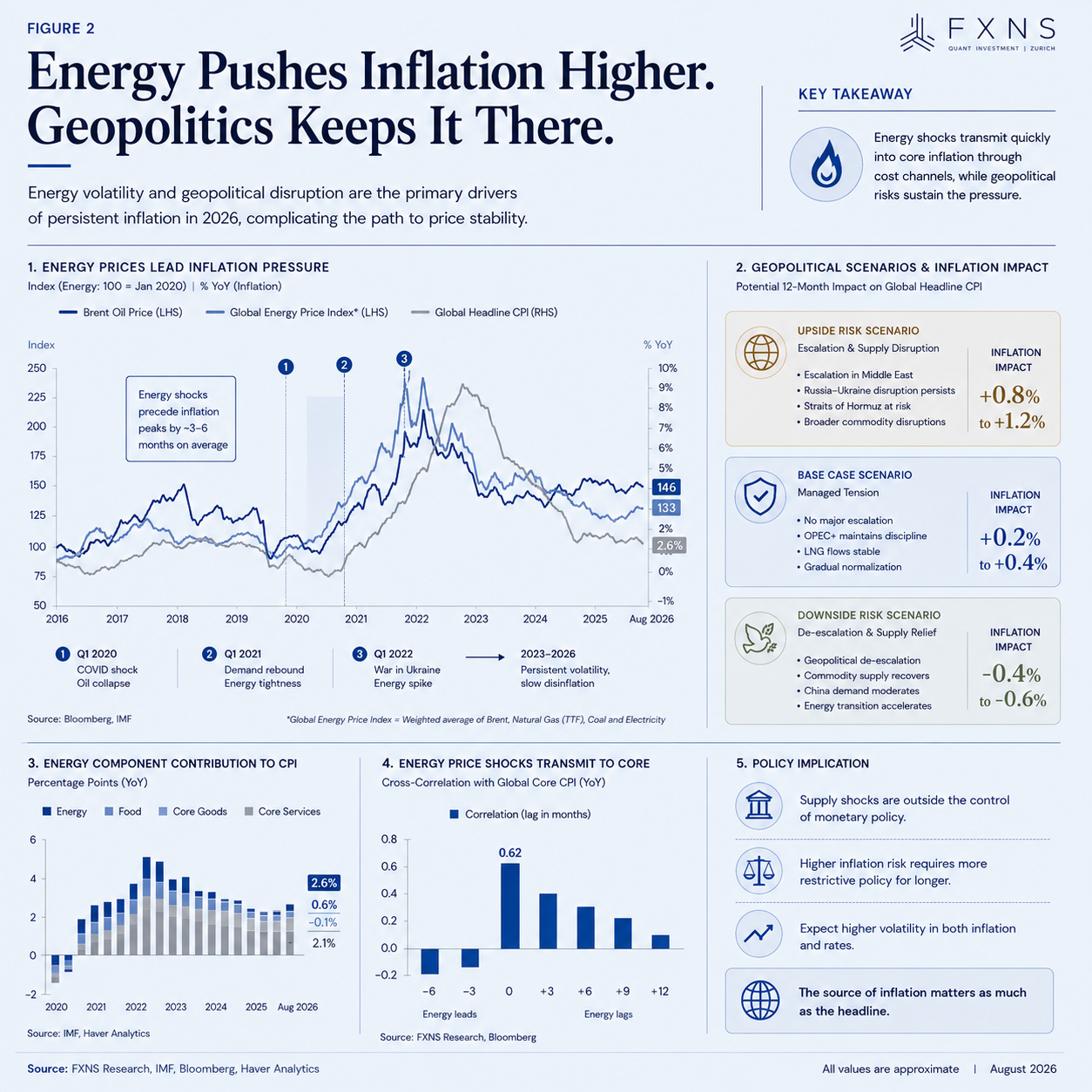
Supply-driven inflation and energy-price transmission
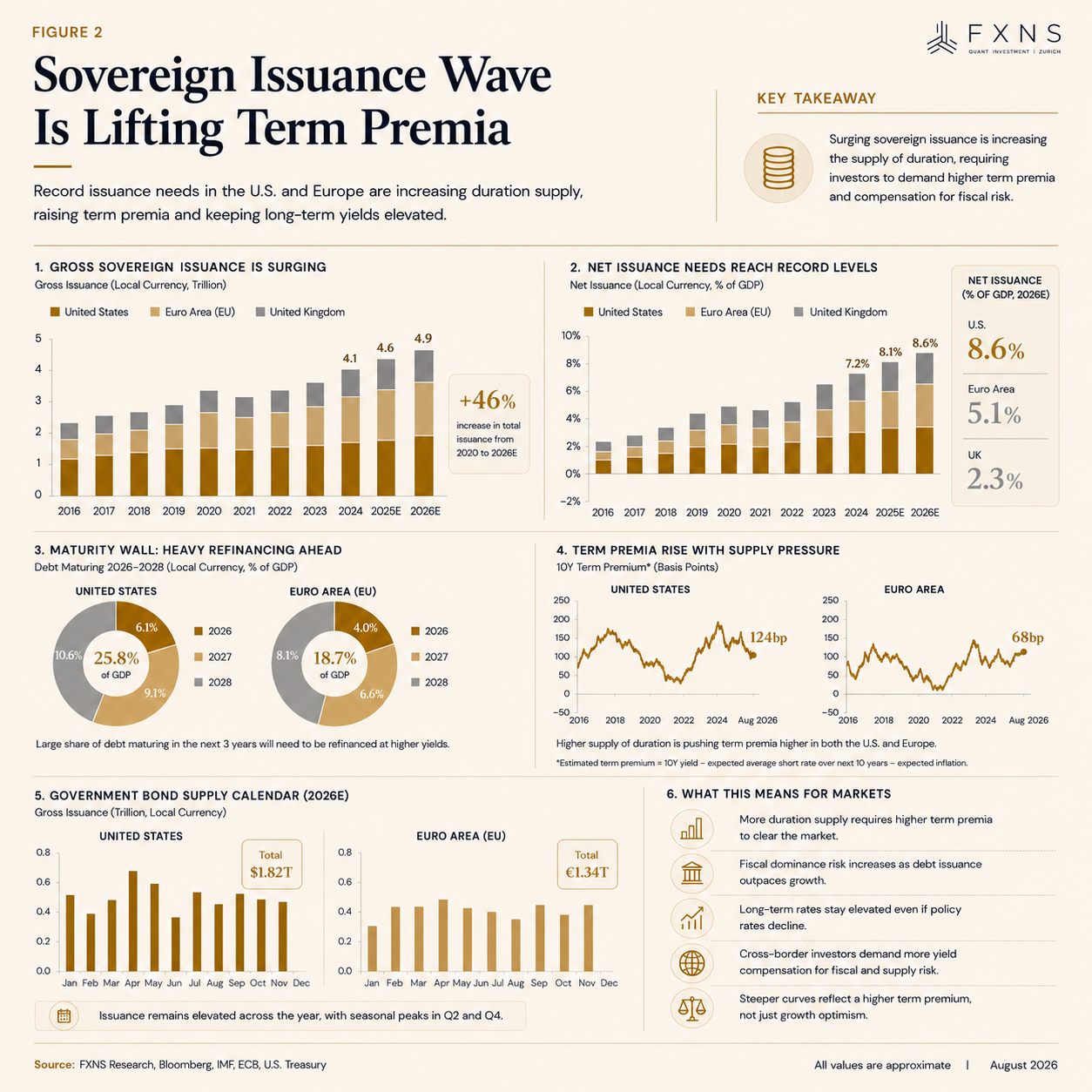
Sovereign issuance, fiscal deficits and term-premium repricing
Policy rates vs. long-term financing conditions
FX, yield-curve and cross-asset allocation implications
KEY QUESTION
Can monetary easing still loosen financial conditions when fiscal pressure and supply shocks keep the long end of the curve elevated?
The Global Rate Cycle Fractures
For much of the post-inflation normalization narrative, investors assumed that the world’s major central banks would eventually converge toward a broadly synchronized easing cycle. 2026 has broken that assumption. Different inflation persistence, growth trajectories and fiscal constraints are forcing monetary policy onto increasingly divergent paths, with the Federal Reserve and the European Central Bank becoming the clearest expression of that fragmentation.
The consequences extend well beyond policy rates. Diverging expectations reshape yield curves, real-rate differentials, currency valuations and international capital flows, creating materially different financial conditions across economies. What once behaved like a relatively coherent global duration trade is becoming a collection of increasingly independent regional rate regimes.
For investors, this changes the architecture of macro allocation. The relevant variable is no longer simply whether rates are falling, but where, how quickly, and against what inflation and fiscal backdrop. Duration, FX exposure and relative-value positioning must therefore be evaluated together rather than as separate portfolio decisions.
Supply Shocks Rewrite the Inflation Function
The inflation problem of 2026 is increasingly difficult to explain through domestic demand alone. Energy volatility, geopolitical disruption, trade barriers and the rapid build-out of AI infrastructure are introducing persistent supply-side pressures into the price formation process. These forces can raise input costs even as economic growth slows, weakening the traditional relationship between monetary tightening, demand destruction and disinflation.
This creates an uncomfortable asymmetry for central banks. Higher rates can suppress consumption and investment, but they cannot produce energy, remove tariffs or expand constrained infrastructure. Monetary policy is therefore being asked to offset inflation originating partly outside its effective transmission mechanism, increasing the economic cost of maintaining price stability.
For markets, the distinction is critical. Supply-driven inflation tends to produce higher inflation risk premia, greater volatility across the curve and a less reliable correlation between bonds and risk assets. The result is a regime in which weaker growth no longer guarantees lower yields—and where the source of inflation matters as much as its headline level.
Fiscal Pressure Is Repricing the Long End
The third force reshaping the 2026 macro landscape is increasingly fiscal rather than monetary. Even as policy rates move lower in parts of the developed world, long-dated sovereign yields have remained unusually resistant to easing. Persistent deficits, elevated refinancing needs and expanding government issuance are forcing investors to demand greater compensation for holding duration. The result is a rebuilding of the term premium: the long end of the curve is no longer simply reflecting expectations for future central-bank rates, but increasingly pricing fiscal supply, inflation uncertainty and sovereign balance-sheet risk.
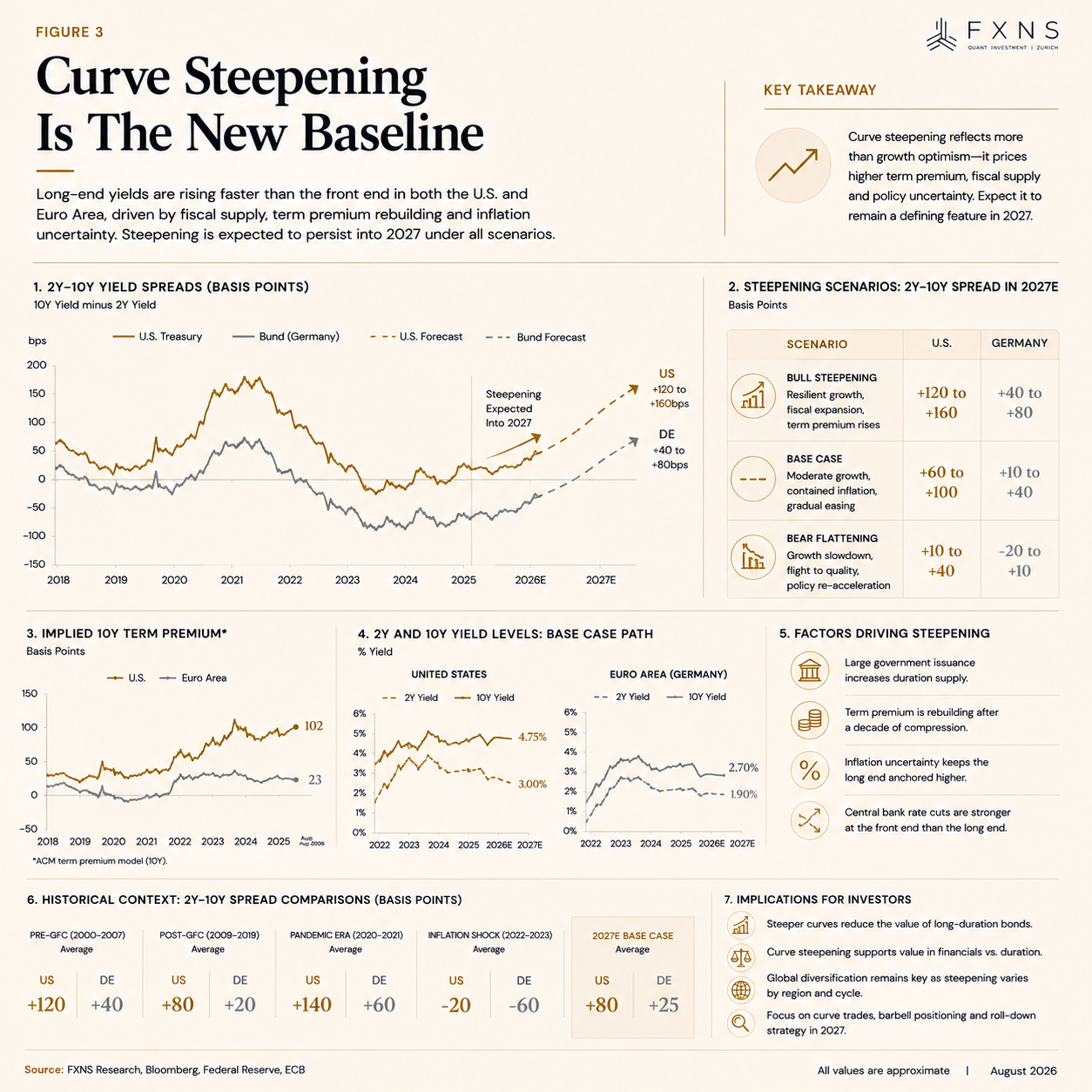
This creates the core Fiscal-Monetary Drag. Central banks can reduce short-term rates while financial conditions remain restrictive because mortgage rates, corporate borrowing costs and infrastructure financing are anchored to longer maturities. The transmission mechanism therefore weakens: monetary easing at the front end can coexist with fiscal tightening through the long end. The divergence is particularly important in highly indebted economies, where larger issuance calendars can steepen curves precisely when policymakers are attempting to stimulate activity.
For investors, duration can no longer be treated as a straightforward expression of the monetary cycle. Curve shape, sovereign issuance, debt-service burdens and term-premium dynamics become independent sources of risk and return. In this regime, the critical question is not simply how far central banks will cut rates, but whether bond markets are willing to finance fiscal trajectories at progressively lower yields. The policy rate may fall while the true cost of capital refuses to follow.