Emerging Markets Are No Longer A Tactical Allocation.
They are becoming a structural source of global growth, liquidity, and market leadership.
The brief
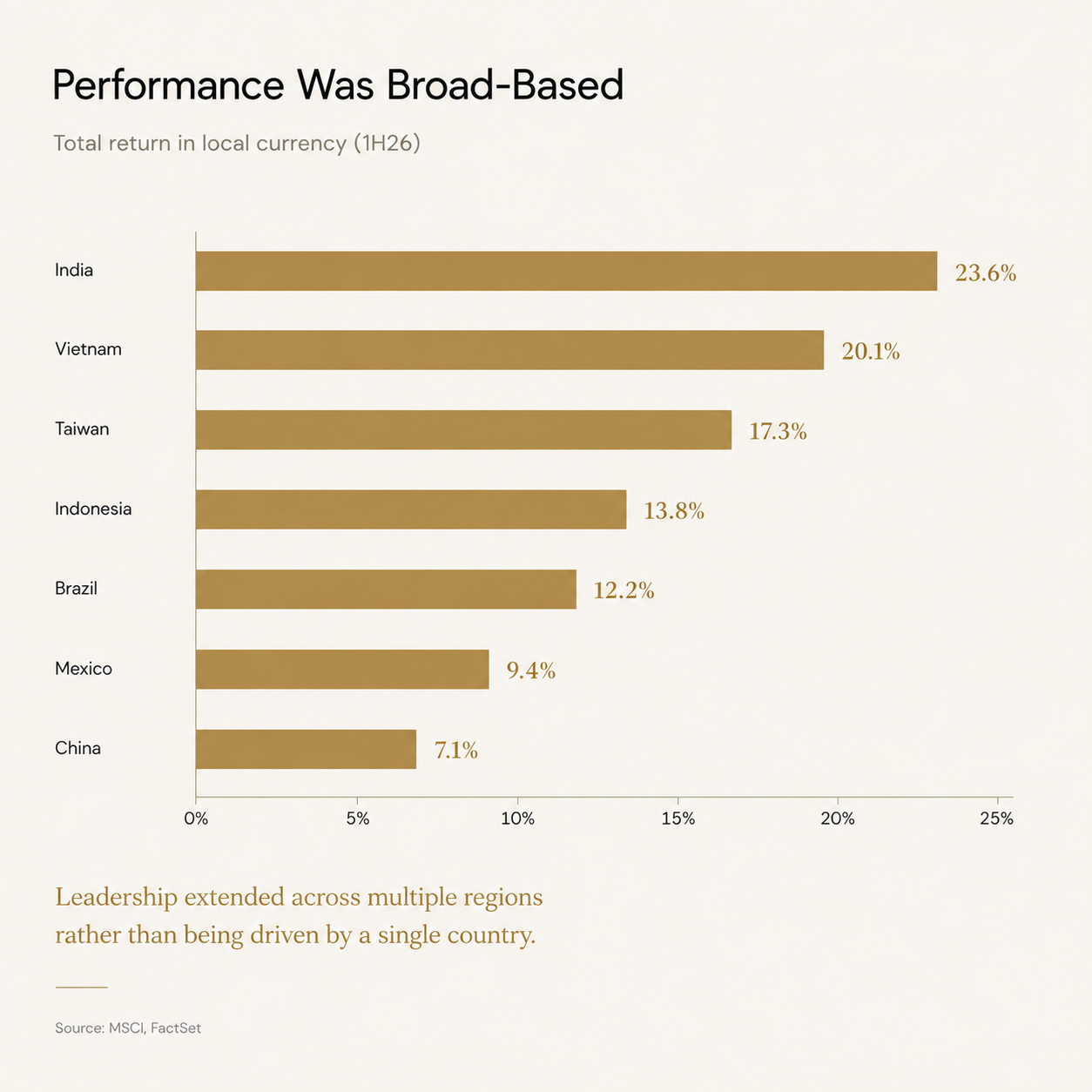
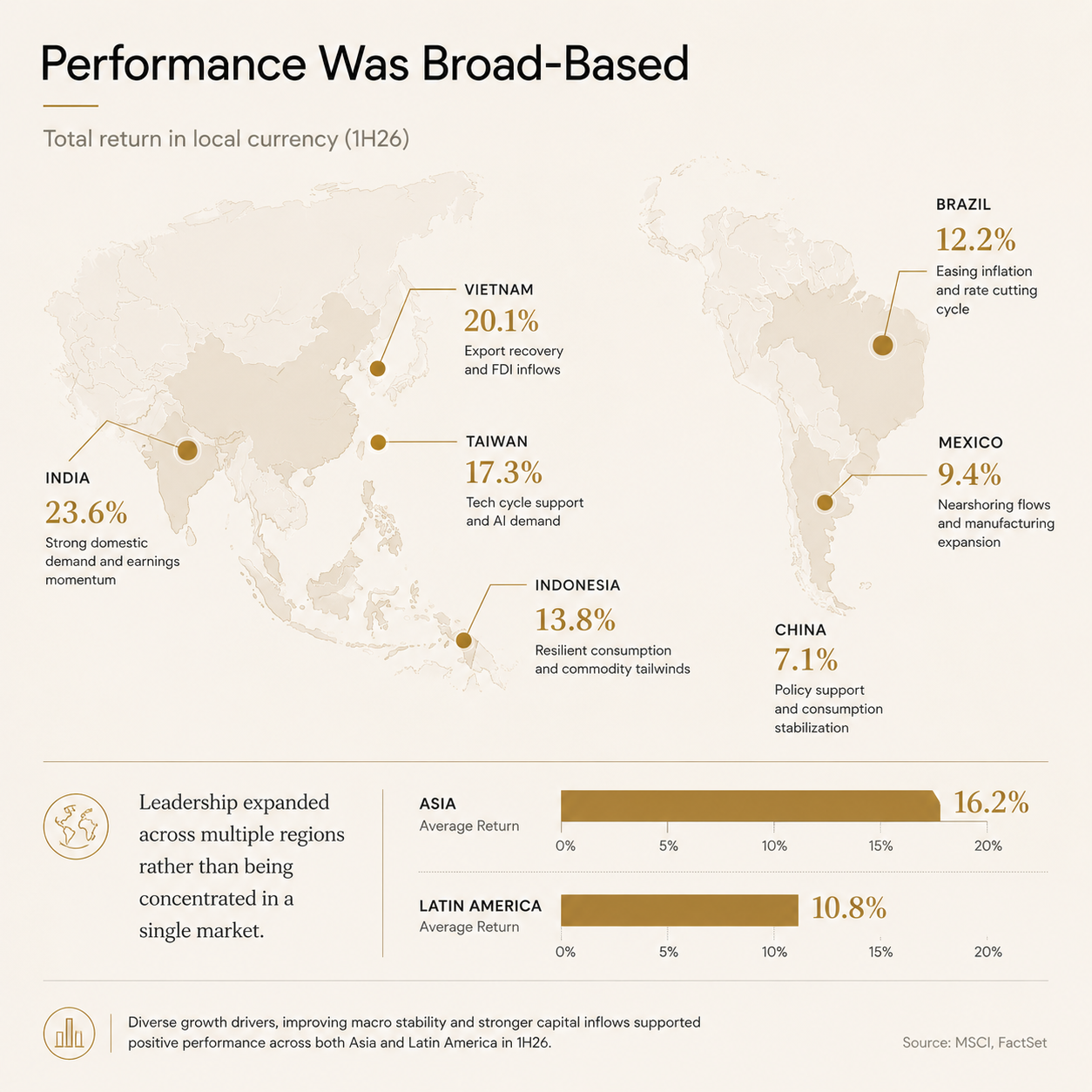
The first half of 2026 marked a notable shift in global equity leadership. While developed markets continued to face slower earnings growth and elevated valuations, several emerging economies benefited from stronger domestic demand, improving macro stability, and increasing capital inflows.
This report examines the structural drivers behind the recent outperformance of Emerging Markets, separating cyclical momentum from longer-term trends that may reshape global asset allocation over the coming years.
Rather than viewing Emerging Markets as a single homogeneous asset class, we analyze the increasingly differentiated opportunities across Asia, Latin America, and selected frontier economies.
RESEARCH FOCUS
• Relative performance versus Developed Markets
• Regional leadership across Asia and Latin America
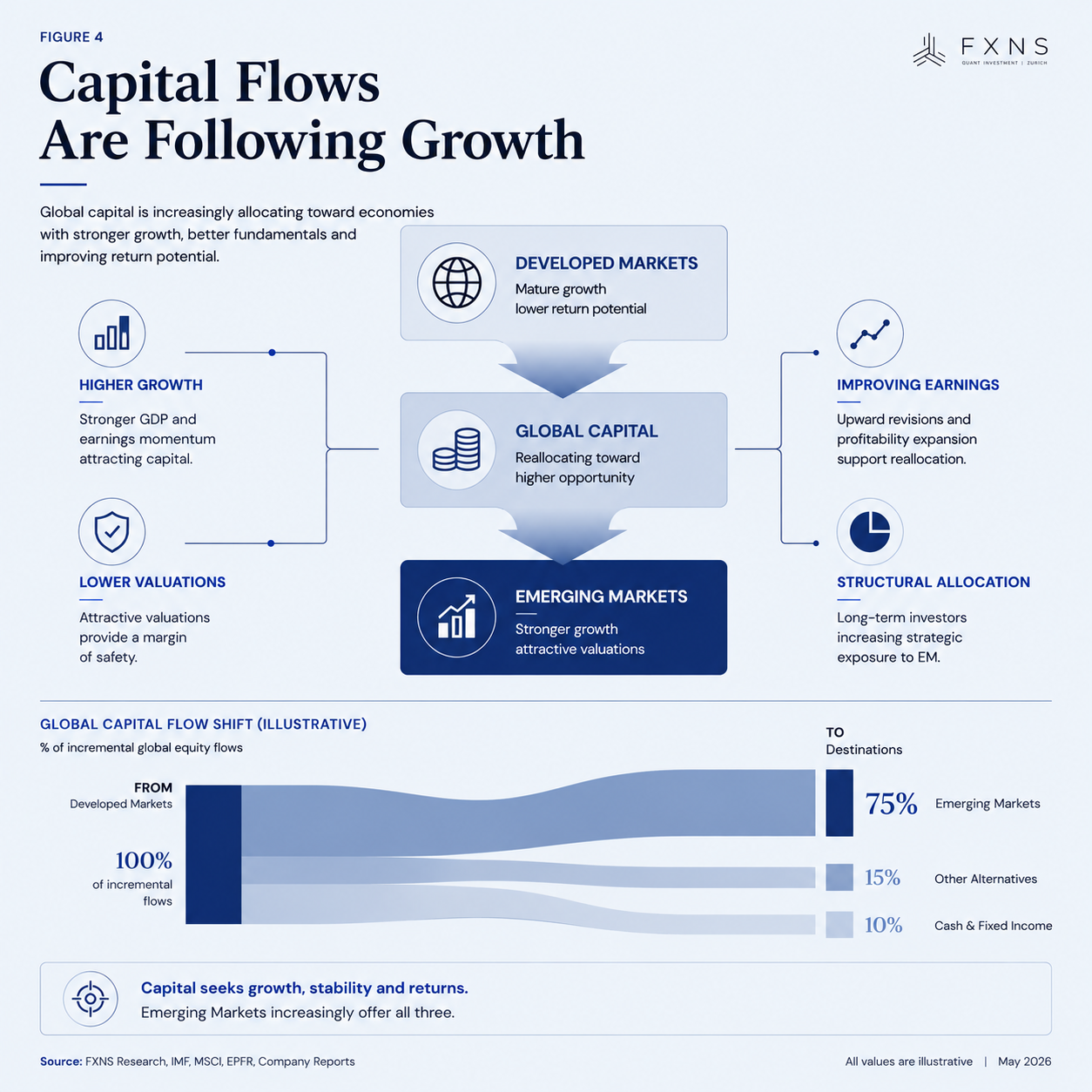
• Currency dynamics and capital flows
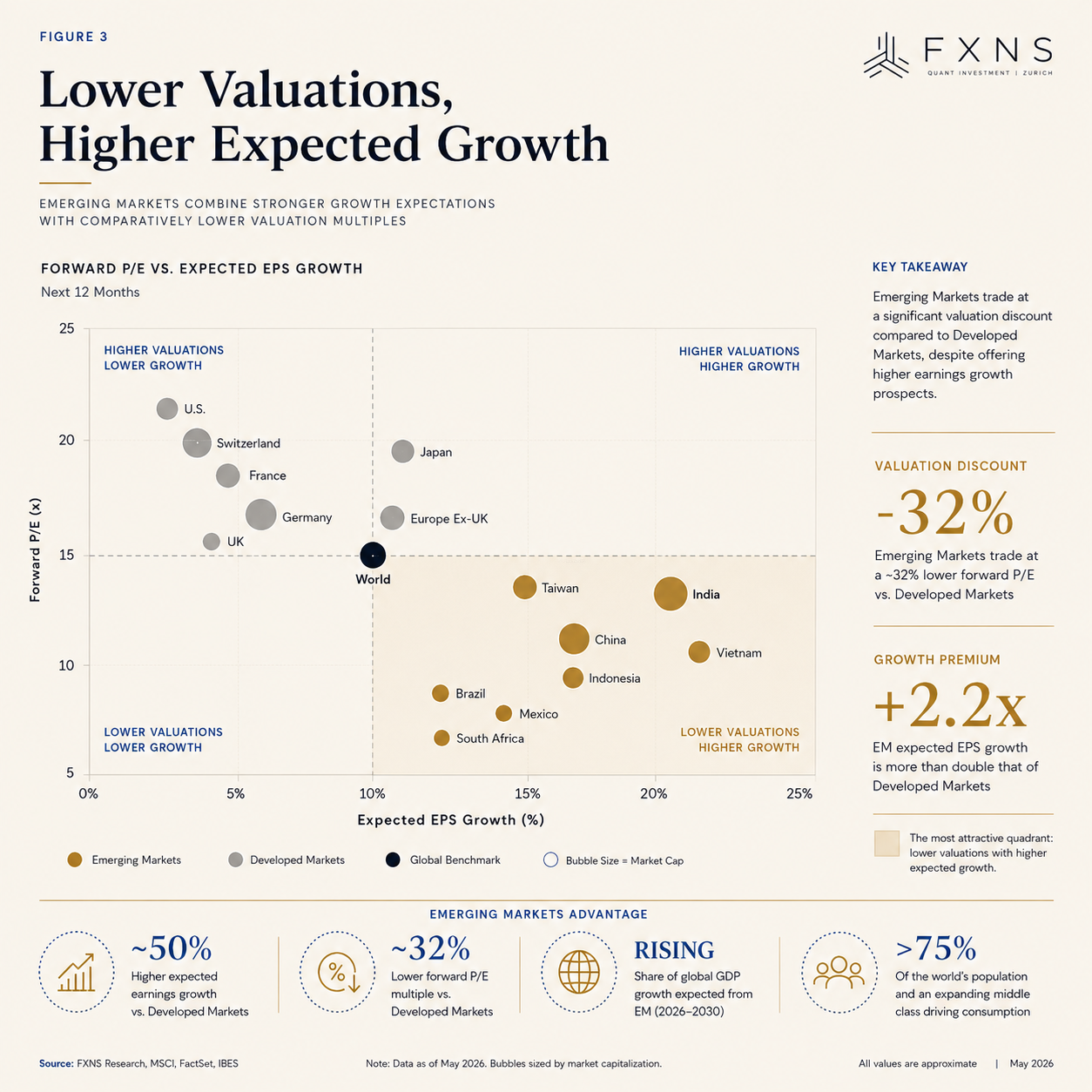
• Valuation dispersion across major indices
• Structural allocation implications for global portfolios
KEY QUESTION
Is the recent leadership of Emerging Markets simply another cyclical rebound, or the beginning of a broader structural rotation in global equity markets?
A more diversified and resilient earnings profile
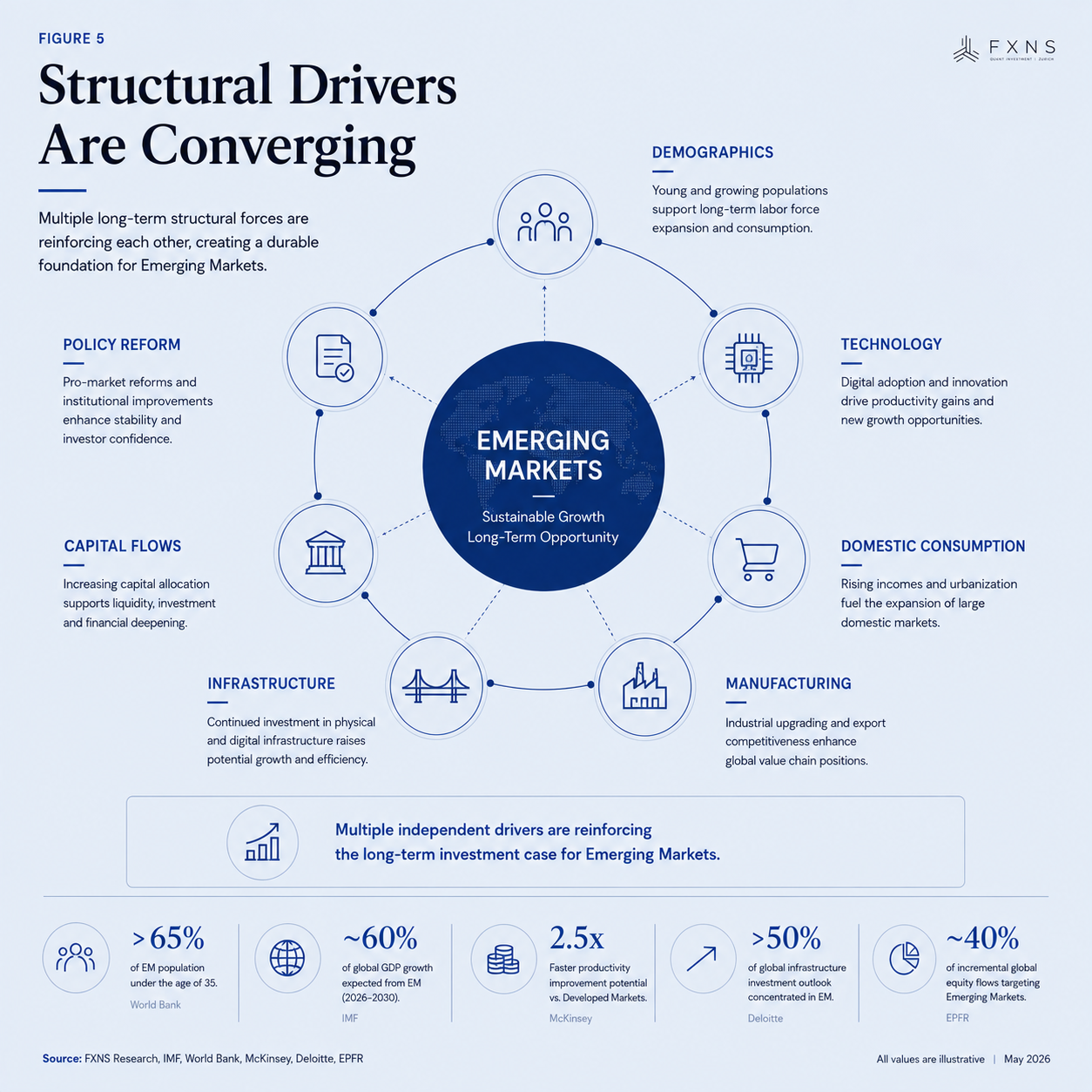
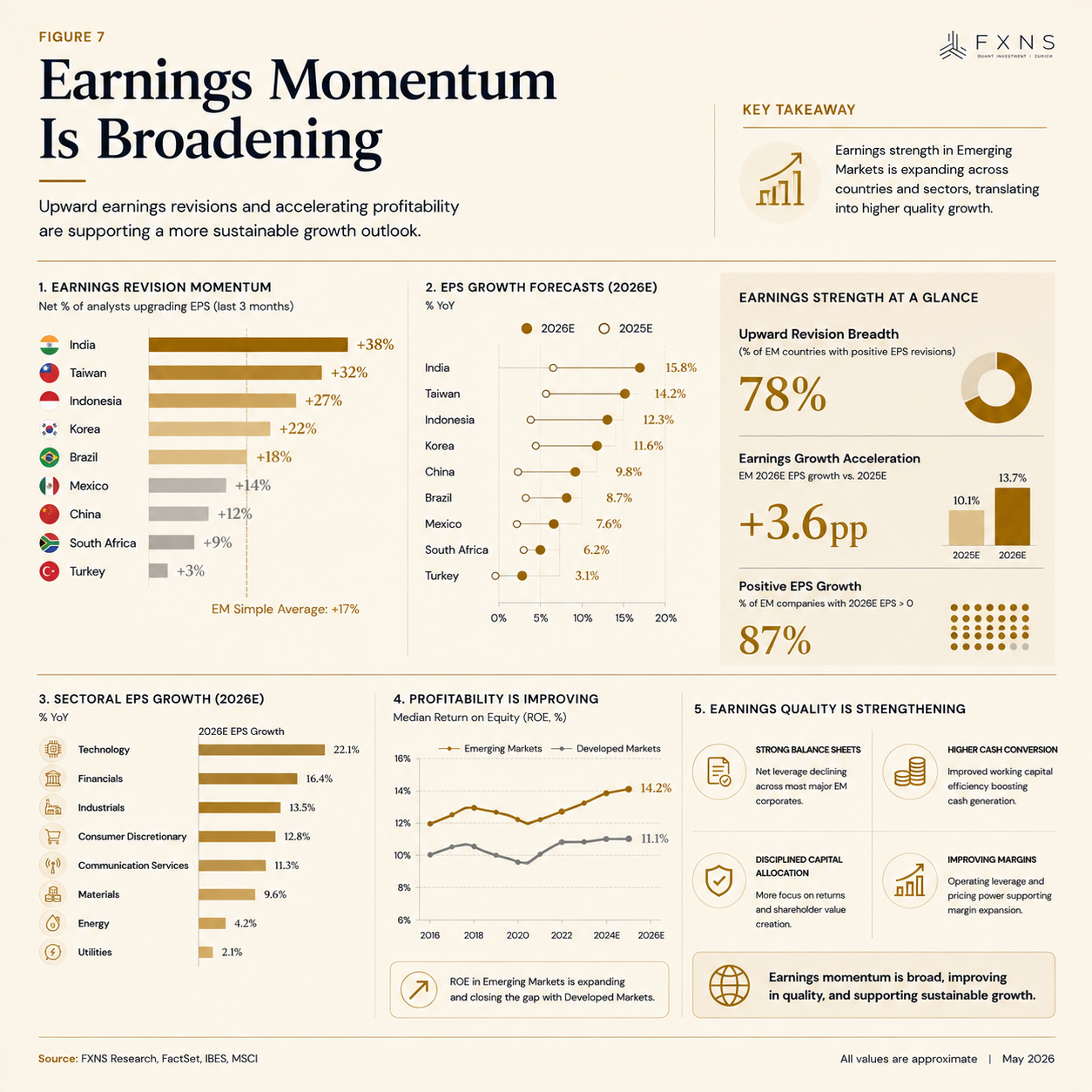
For much of the past decade, Emerging Markets have often been viewed through a tactical lens—high-beta exposures capable of outperforming during periods of abundant liquidity, only to underperform when global financial conditions tightened. That framework, however, may no longer fully explain what is unfolding. The first half of 2026 highlighted a notable divergence in market leadership, with several Emerging Market indices delivering stronger relative performance despite persistent geopolitical uncertainty, elevated interest rates across developed economies, and a still-fragile global manufacturing cycle. Rather than being driven by a single catalyst, this outperformance appears to reflect a broader combination of improving macroeconomic fundamentals, healthier fiscal positions, accelerating domestic demand, and a gradual reallocation of global capital toward economies exhibiting stronger structural growth. At the same time, the composition of Emerging Markets has evolved significantly. The asset class is no longer defined solely by commodity exporters or export-driven manufacturing hubs. Technology, digital infrastructure, financial services, healthcare, advanced manufacturing, and domestic consumption now represent an increasingly important share of index composition, creating a more diversified and resilient earnings profile. Meanwhile, valuation dispersion between Developed and Emerging Markets remains historically attractive, particularly when adjusted for expected earnings growth and long-term demographic trends. This changing landscape suggests that recent performance should not necessarily be interpreted as another cyclical rebound, but potentially as the early phase of a broader structural rotation in global equity allocation. For institutional investors, the relevant question is therefore no longer whether Emerging Markets deserve tactical exposure during favorable market conditions, but whether their strategic portfolio weight continues to reflect the realities of a world in which economic growth, capital formation, technological adoption, and consumer expansion are increasingly concentrated outside traditional developed economies. Understanding whether this transition represents a temporary dislocation or the beginning of a lasting regime shift requires looking beyond headline index performance and examining the underlying drivers of leadership, regional differentiation, capital flows, and valuation dynamics.
The resilience of the Emerging Markets
While the recent outperformance has attracted increasing investor attention, the underlying dynamics remain far more nuanced than headline index returns suggest. Regional leadership has become increasingly diversified, with domestic consumption, manufacturing upgrades, digitalization, and capital expenditure cycles contributing differently across individual economies. This diversification reduces dependence on any single country or sector and reinforces the resilience of the broader Emerging Markets universe. At the same time, global capital allocation continues to respond not only to relative growth expectations, but also to valuation differentials, earnings revisions, and changing monetary policy expectations. Understanding how these structural forces interact is essential for distinguishing temporary market momentum from a more durable shift in global equity leadership.
From Tactical Exposure To Strategic Allocation
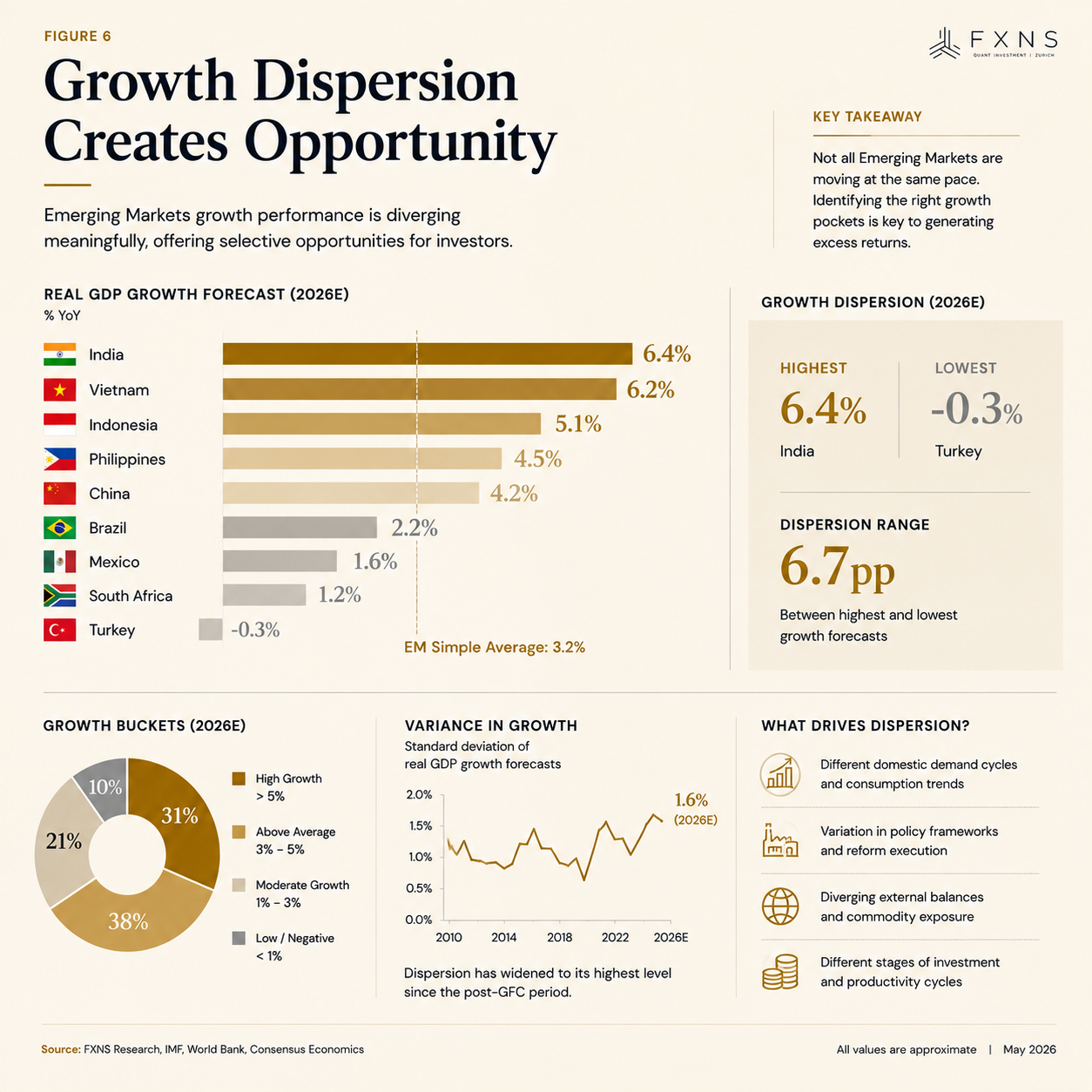
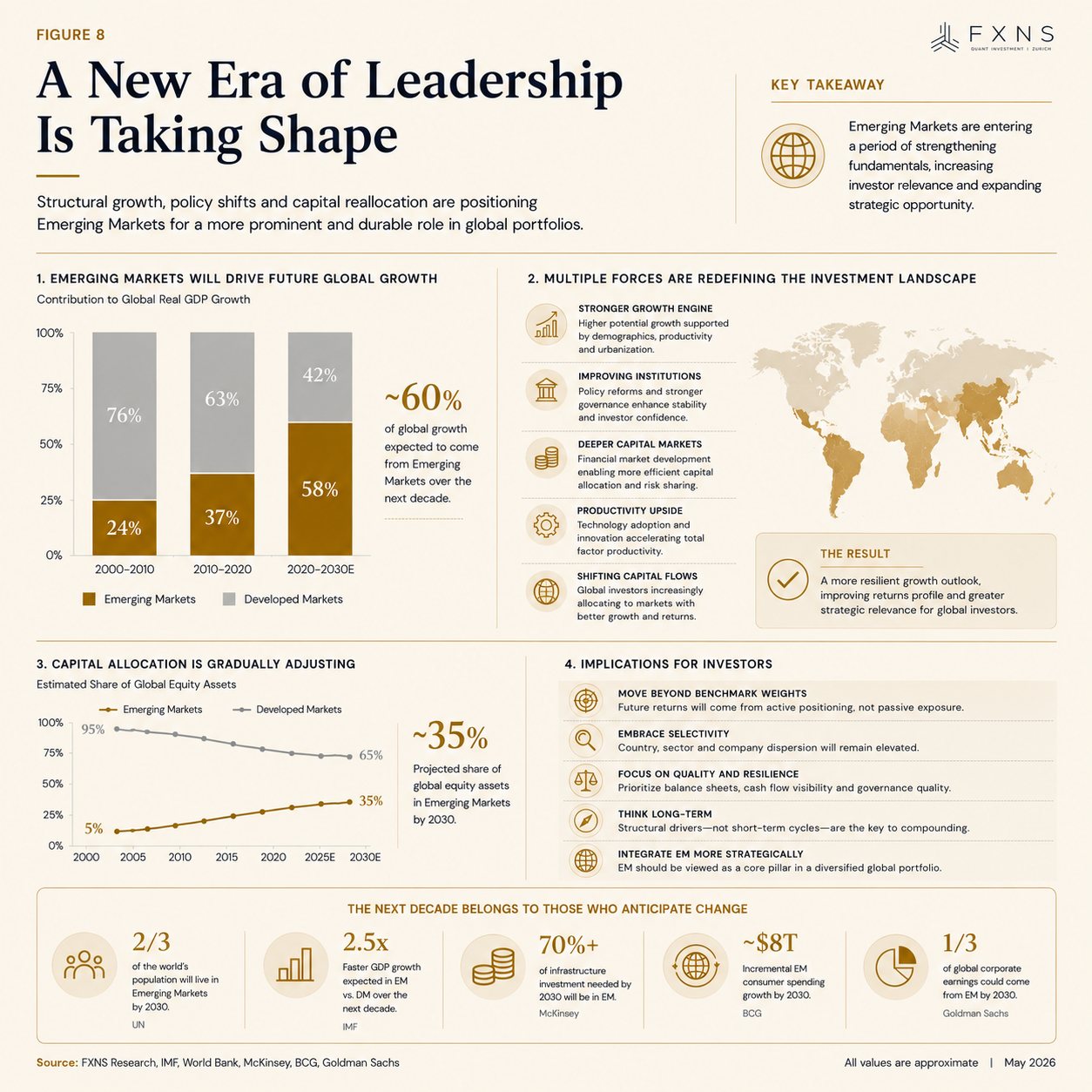
The implications of this shift extend beyond relative performance. If Emerging Markets are entering a period in which stronger domestic growth, improving institutional frameworks, deeper capital markets, and accelerating productivity gains increasingly reinforce one another, the traditional approach of treating the asset class primarily as a cyclical or opportunistic allocation becomes more difficult to justify. Yet a larger strategic role does not imply indiscriminate exposure. Dispersion within Emerging Markets remains substantial: monetary regimes differ, fiscal capacity varies widely, currencies respond differently to external shocks, and political or regulatory risk can materially alter expected returns. Country selection therefore becomes as important as the aggregate allocation itself. The opportunity lies not in assuming that Emerging Markets will move together, but in identifying where structural growth is translating into durable earnings, improving balance sheets, and more efficient capital formation. This also changes the way risk should be interpreted. Volatility may remain higher than in Developed Markets, but volatility alone does not capture the underlying quality or persistence of economic change. For global investors, the more relevant question is whether portfolio construction adequately reflects the gradual redistribution of growth, investment, consumption, and corporate profitability across the world economy. As these forces become increasingly concentrated outside traditional Developed Markets, benchmark weights rooted largely in historical market capitalization may offer an incomplete representation of future opportunity. The emerging regime therefore argues for a more granular framework—one that separates structural winners from cyclical beneficiaries, distinguishes domestic resilience from external dependence, and evaluates Emerging Markets not as a single trade, but as an increasingly important collection of distinct economies within global strategic allocation.