Agriculture Is No Longer Financed Only By Banks.
Future harvests, private credit and even conservation commitments are becoming investable securities.
The brief
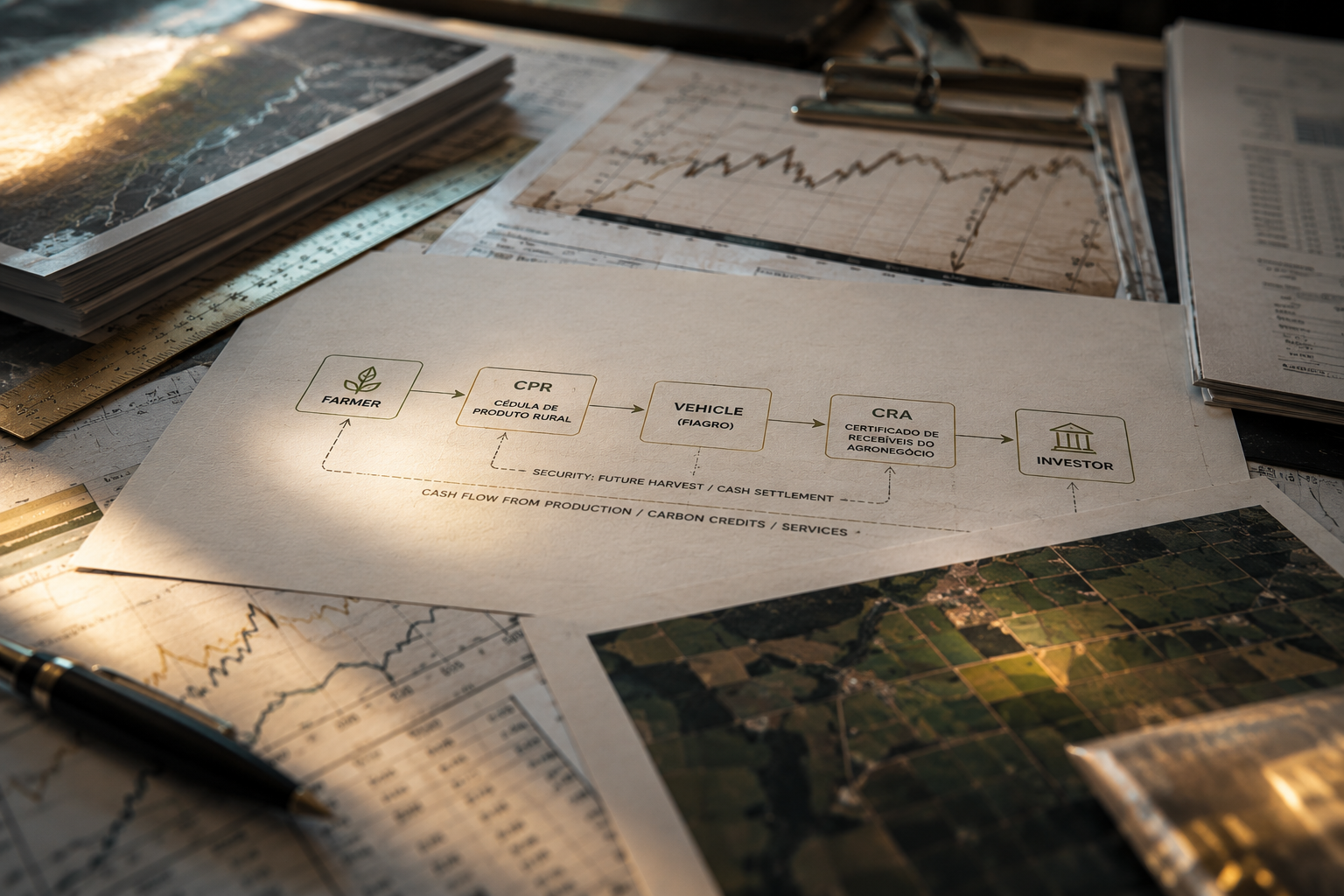
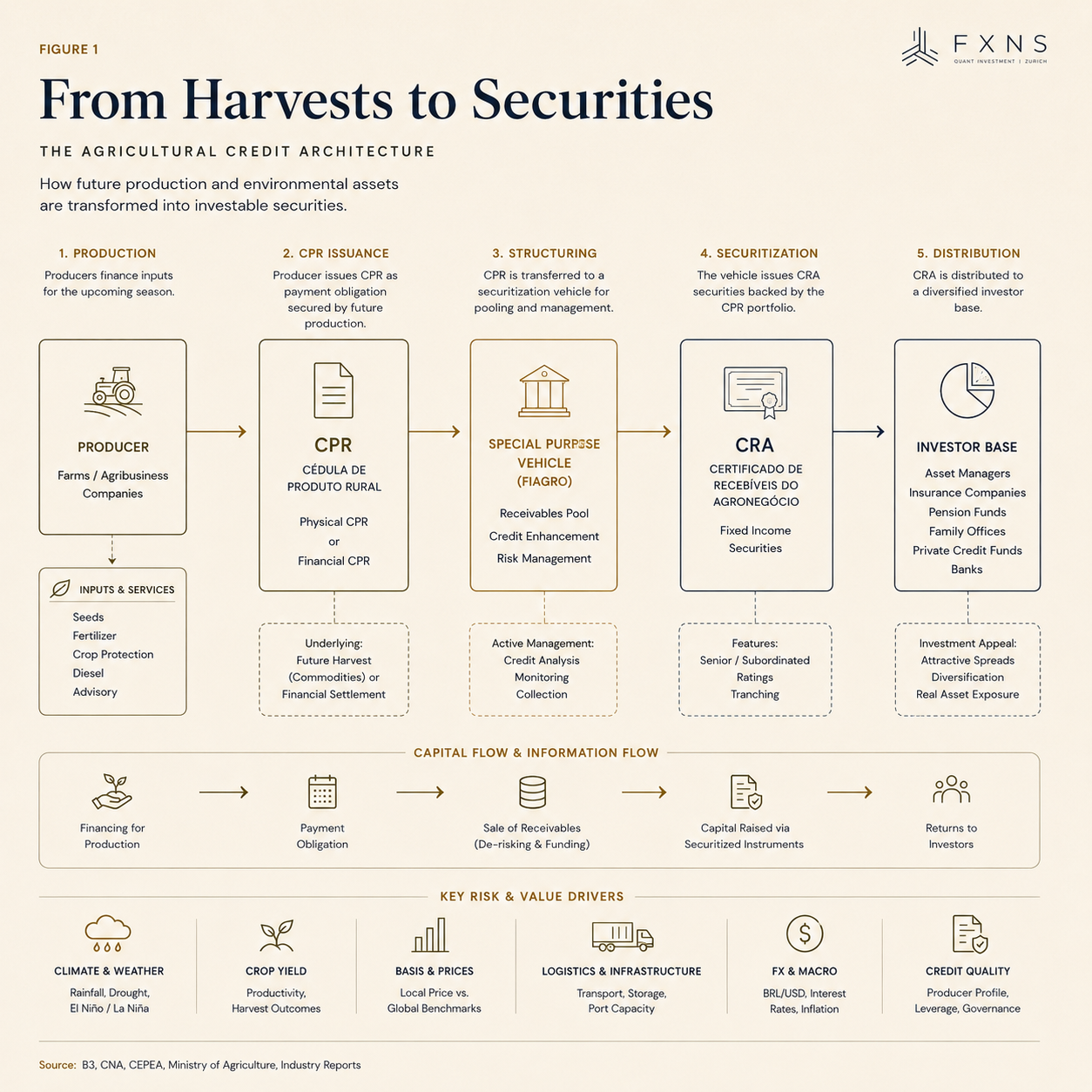
Across Brazil, a sophisticated financing architecture has developed largely outside traditional bank lending. At its core is the Cédula de Produto Rural (CPR), a credit instrument through which agricultural producers can raise capital against future production or financial settlement obligations.
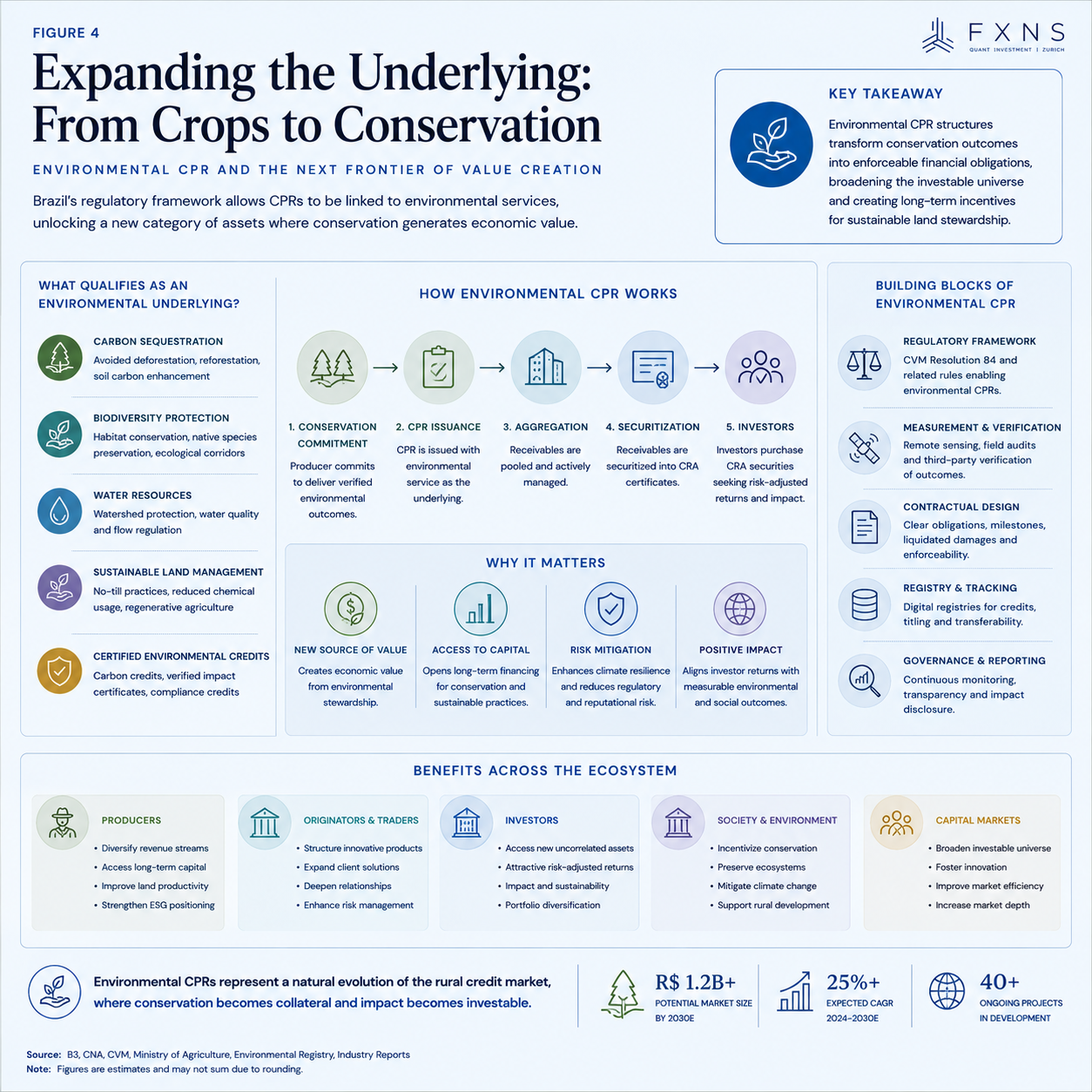
These receivables can move beyond the farm balance sheet into capital-market structures, connecting producers with securitization vehicles, CRA investors and increasingly the FIAGRO ecosystem. More recently, the expansion of CPR structures toward environmental services has introduced a new underlying: conservation itself.
The result is an agricultural credit market in which future harvests, commodity prices, local basis, climate exposure and environmental assets increasingly intersect within the same financial architecture.
RESEARCH FOCUS
CPR as an instrument of agricultural financing
CRA securitization and the FIAGRO ecosystem
Green CPR and environmental services
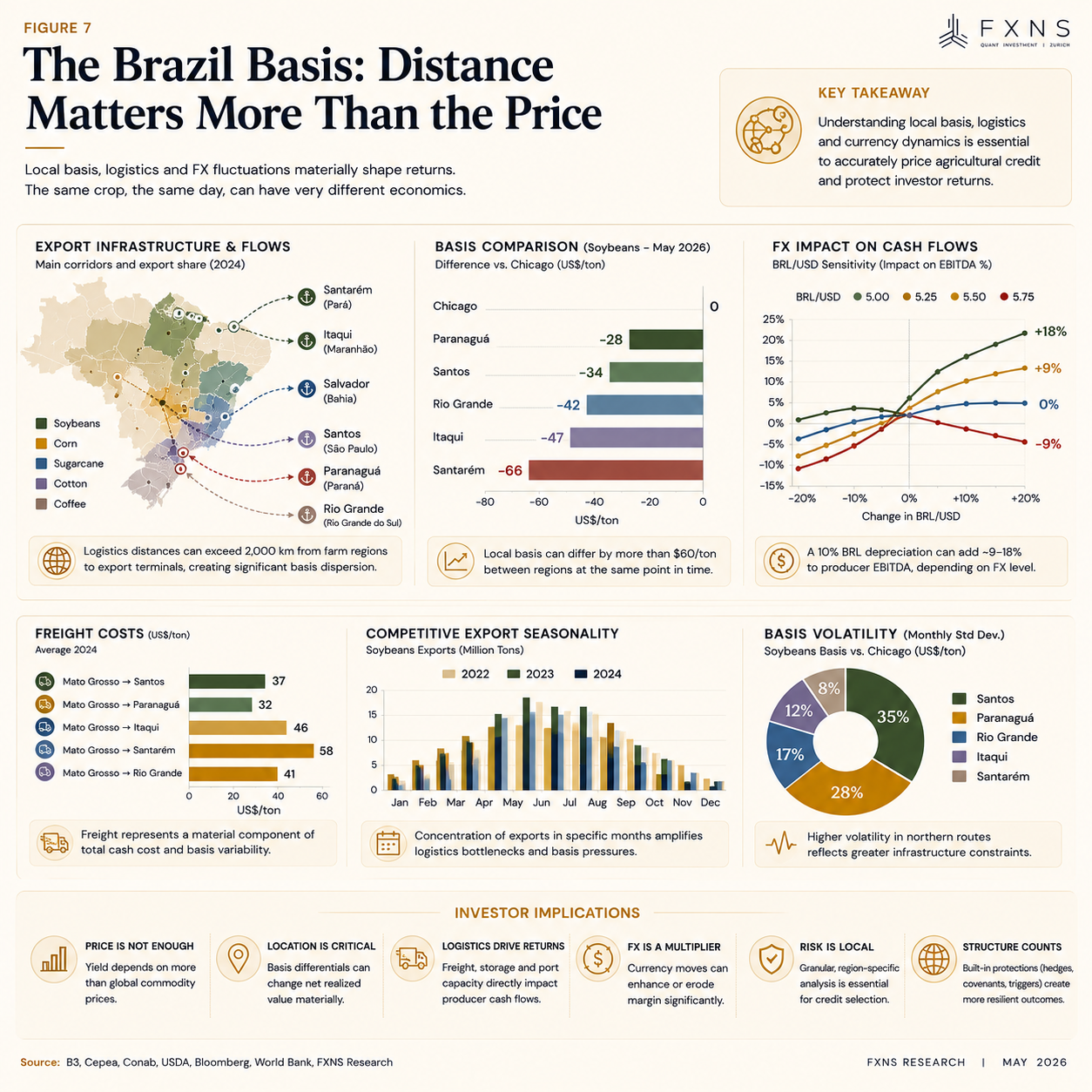
Commodity basis and local price formation
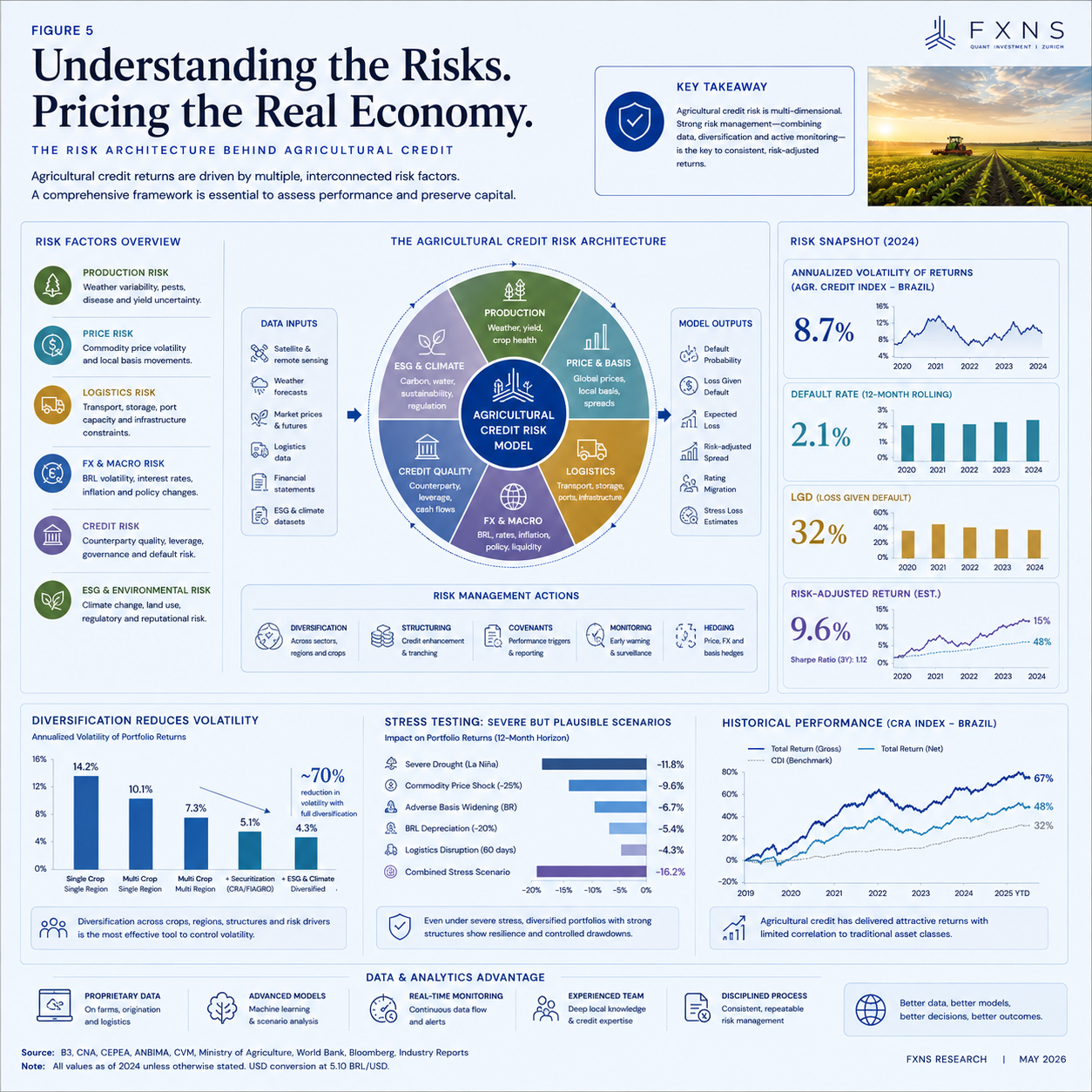
Climate risk and agricultural credit performance
KEY QUESTION
Can future production—and eventually conservation itself—be transformed into a scalable capital-market asset class?
From Future Harvests to Capital
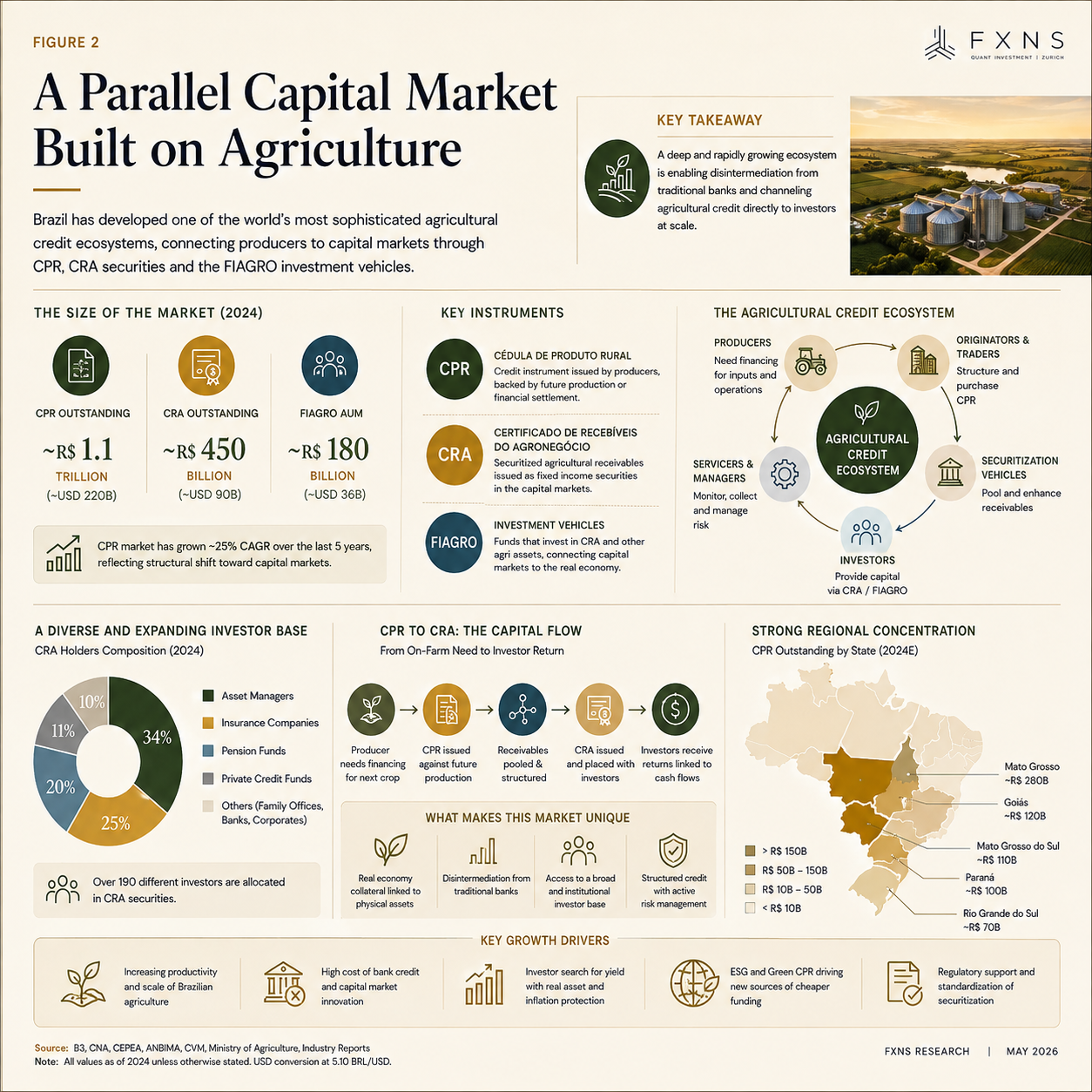
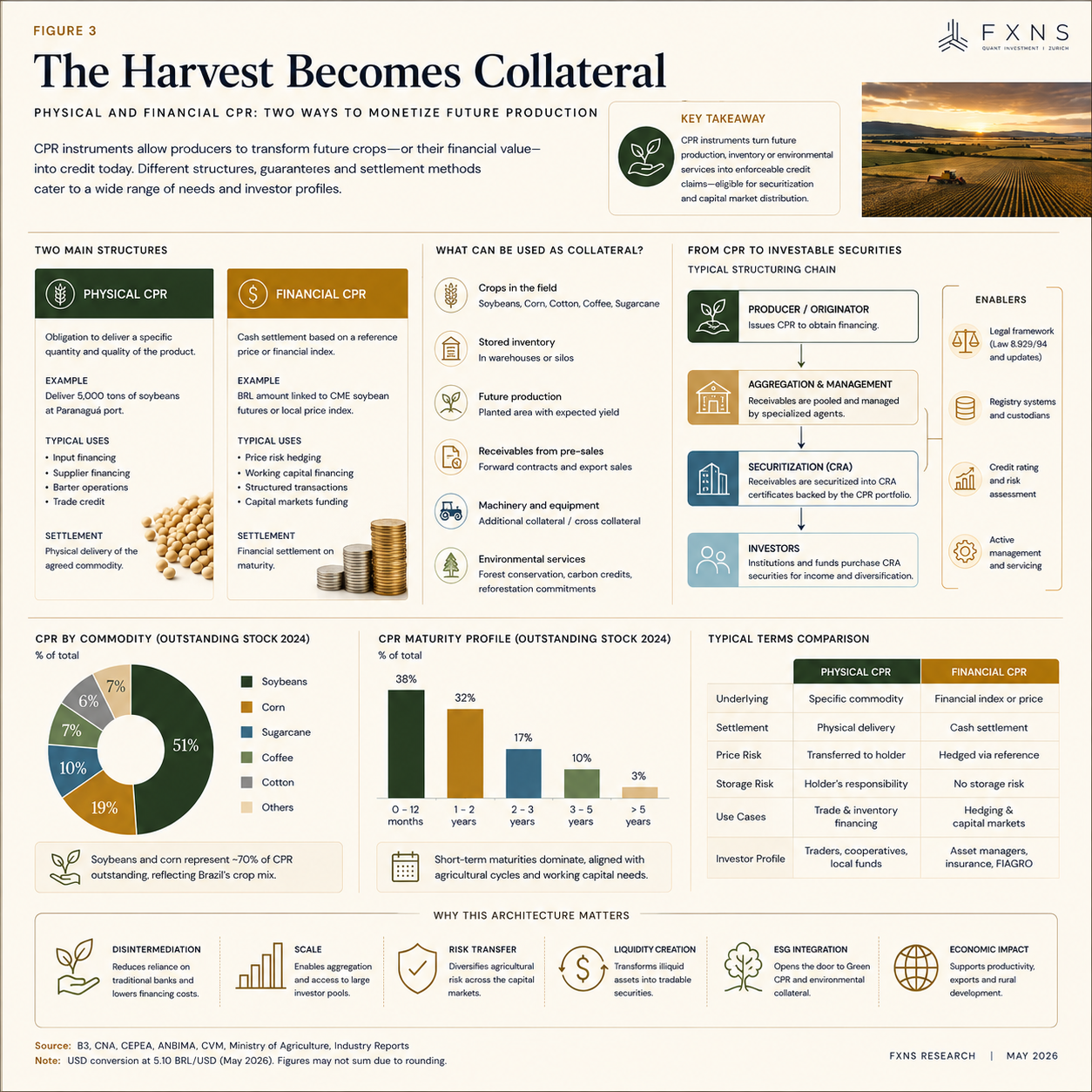
Agricultural finance in Brazil has evolved into something considerably more sophisticated than conventional seasonal lending. At the center of this architecture is the Cédula de Produto Rural (CPR), an instrument that allows producers to raise capital today against an obligation linked to future agricultural production or its financial equivalent. In practical terms, an asset that does not yet exist—the next harvest—can become the economic foundation of present-day financing. This mechanism changes the traditional relationship between agriculture and credit. Rather than relying exclusively on commercial banks to intermediate working capital, producers can connect more directly with input suppliers, trading companies, asset managers and capital-market investors, while CPR receivables can subsequently enter broader investment and securitization structures. CRA securities and the expanding FIAGRO ecosystem extend this architecture further, transforming dispersed agricultural credit exposures into instruments that can be financed, pooled and ultimately held by a much wider investor base. What emerges is effectively a parallel capital market built around the agricultural production cycle: planting generates financing needs, future output supports credit creation, receivables become financial assets, and capital is redistributed back toward producers. Yet the underlying risk never becomes purely financial. The value of these instruments remains connected to physical production, local commodity prices, logistics, weather conditions and the ability of individual farms to deliver or settle their obligations. This creates an unusual intersection between structured credit and the real economy, where the quality of a security can depend simultaneously on contractual design, soybean yields, rainfall patterns, exchange rates and the price differential between an inland producing region and an international benchmark. The result is not simply a new source of agricultural funding. It is a financial architecture capable of converting future physical production into present liquidity—and of transferring agricultural risk from individual balance sheets into increasingly sophisticated capital-market structures.
When Conservation Becomes an Underlying
The evolution of agricultural credit is beginning to extend beyond the financing of physical production. Brazil’s regulatory framework allows CPR structures to reference certain environmental services, creating the possibility of financing economic value associated with conservation, carbon-related outcomes and other ecosystem services rather than solely with crops delivered at harvest. This changes the nature of the underlying asset. A producer may no longer be monetizing only what the land can produce, but potentially also the environmental value generated by how that land is managed. For investors, however, this introduces a different and more complex risk architecture. Agricultural credit already requires an understanding of crop yields, commodity prices, local basis, logistics and borrower quality; environmental CPR structures add questions of measurement, verification, permanence and enforceability. The financial innovation therefore lies not simply in attaching a “green” label to rural debt, but in developing contractual mechanisms capable of converting measurable environmental performance into a financeable obligation. If these structures continue to mature, conservation could increasingly function alongside agricultural production as another source of collateral-like economic value—broadening the set of assets through which rural enterprises can access capital while creating a direct financial incentive for preserving productive landscapes and native ecosystems.
Beyond Commodity Prices: The Architecture of Agricultural Risk
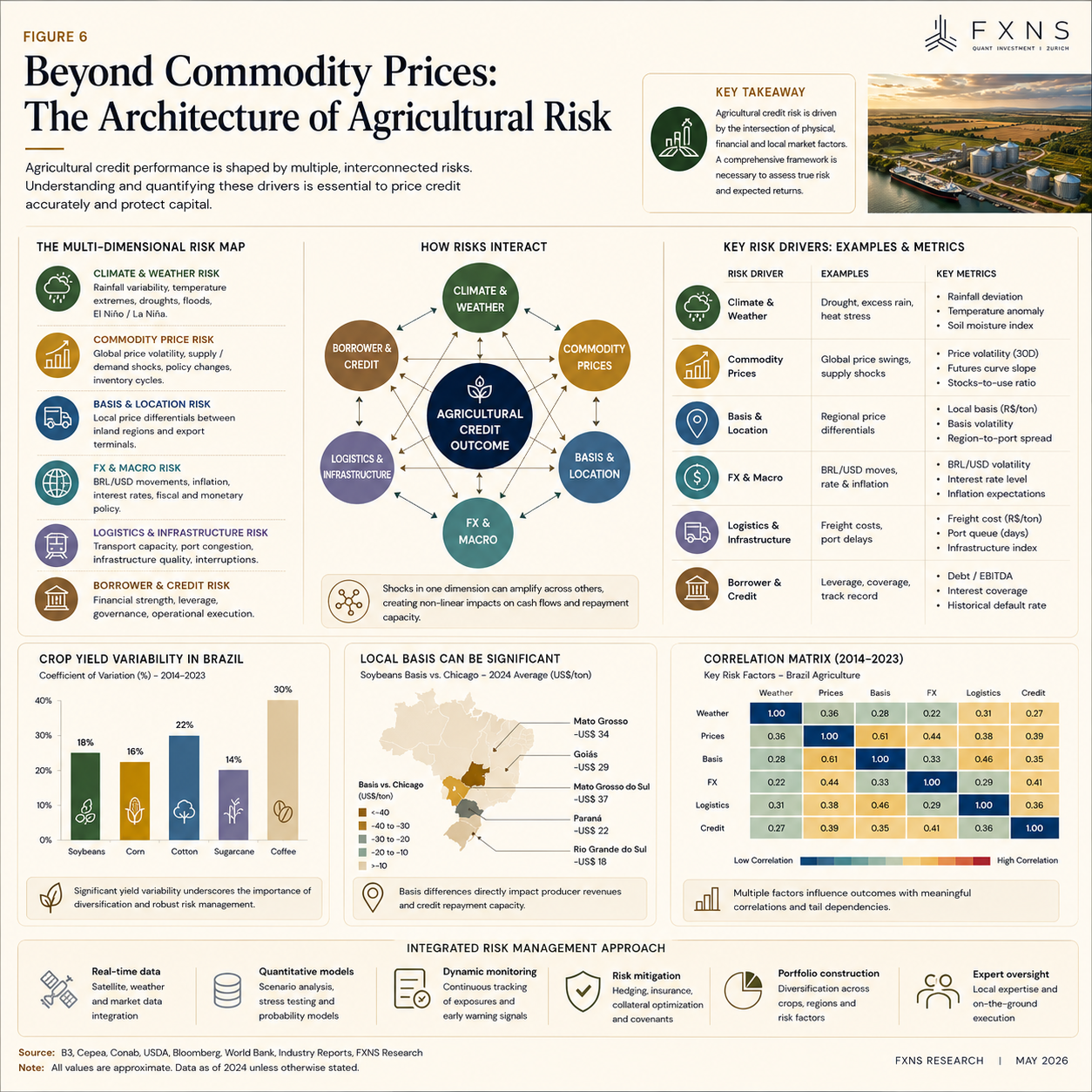
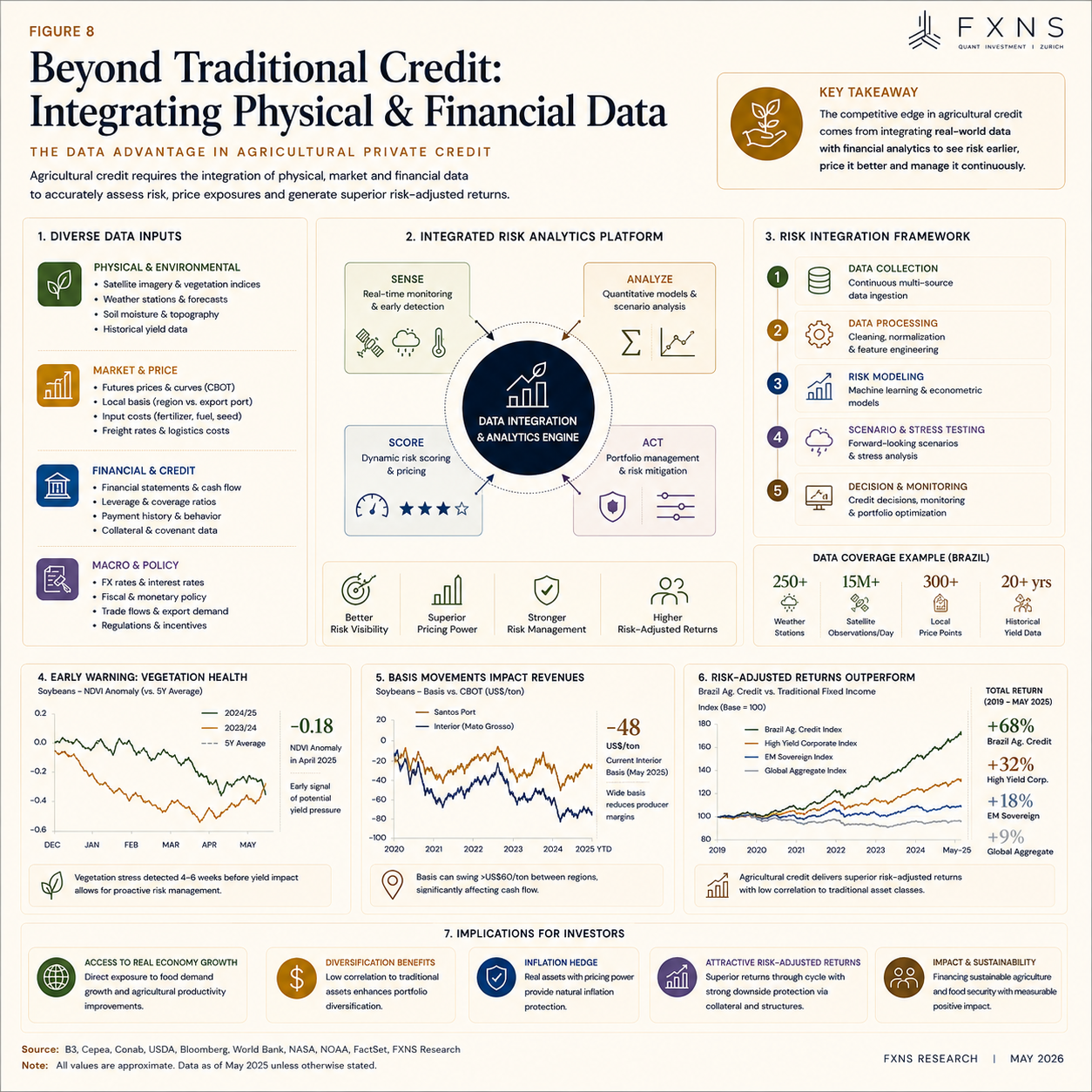
The investment case for agricultural credit ultimately depends on understanding that these instruments cannot be priced through conventional credit analysis alone. A producer may have a strong balance sheet and an established operating history, yet repayment capacity remains exposed to variables originating far beyond the borrower itself. Rainfall determines yields; international commodity markets influence revenues; BRL/USD movements alter both input costs and realized export prices; transportation constraints affect the value ultimately received at the farm gate; and the spread between international benchmarks and local cash prices can materially change economics even when the global commodity price appears stable. This basis risk is particularly important in a country as geographically large as Brazil, where the value of the same crop can differ substantially between an inland producing region and an export terminal such as Santos or Paranaguá. Climate introduces another layer of non-linearity. Drought, excessive rainfall, heat stress and El Niño or La Niña events can simultaneously affect production volumes, commodity prices, logistics and borrower creditworthiness, creating correlations that traditional diversification models may underestimate. The challenge for investors is therefore to integrate physical and financial information within the same underwriting framework: satellite observations, weather forecasts and crop conditions alongside futures curves, local basis, freight costs, FX exposure, leverage and cash-flow coverage. As these datasets become more granular and monitoring increasingly continuous, agricultural private credit begins to resemble a quantitatively managed real-economy asset class rather than conventional rural lending. That distinction is central to its potential scalability. The competitive advantage will not come simply from providing capital at a higher yield, but from identifying, pricing and structuring risks that less specialized lenders cannot observe with the same precision. In that sense, Brazil’s agricultural credit market represents something broader than financial disintermediation: it demonstrates how capital markets can be engineered around the complex economics of physical production itself.