Negative electricity prices reveal where renewable growth is outpacing the flexibility of the power system.
THE QUESTION
Why are negative electricity prices becoming more frequent across European wholesale markets, and what do they reveal about the structural limits of the current power system?
THE FRAMEWORK
We examine the interaction between renewable penetration, demand conditions, transmission constraints, storage capacity and generation inflexibility. The objective is to distinguish temporary pricing anomalies from structural signals of an increasingly constrained electricity system.
INVESTMENT RELEVANCE
Persistent negative pricing reshapes the economics of renewable generation, storage, transmission infrastructure and flexible power assets. Understanding where and why these episodes occur helps identify both stranded exposure and the infrastructure required to restore system balance.
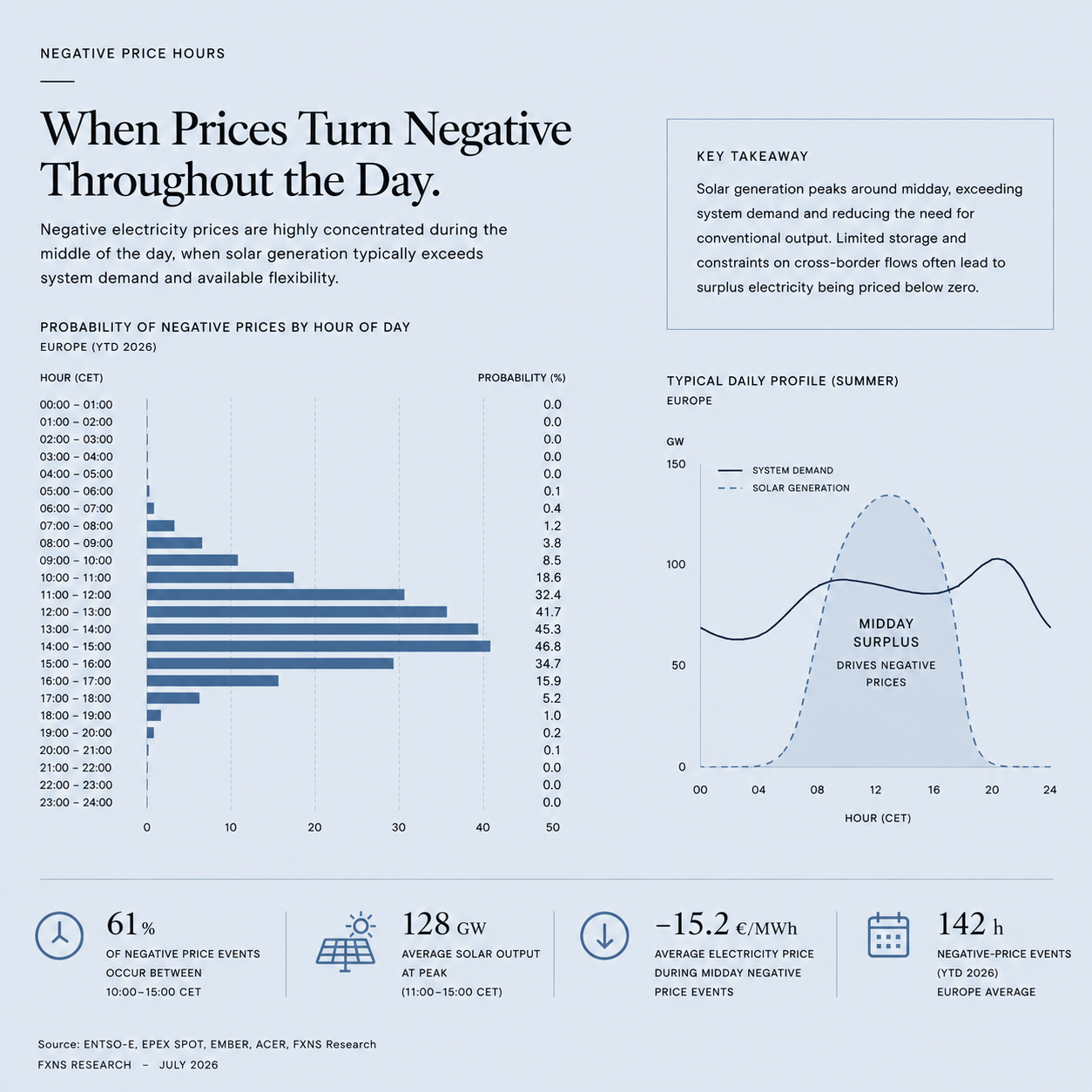
The persistence of negative electricity prices can no longer be regarded as an isolated market anomaly. Across several European wholesale electricity markets, both the frequency and duration of negative pricing episodes have increased materially over recent years, while their geographical distribution has expanded well beyond the traditional high-renewable regions. What was once considered an occasional consequence of exceptional weather conditions has progressively evolved into a recurring feature of the European power market, reflecting deeper structural changes in the way electricity is generated, transmitted and consumed.
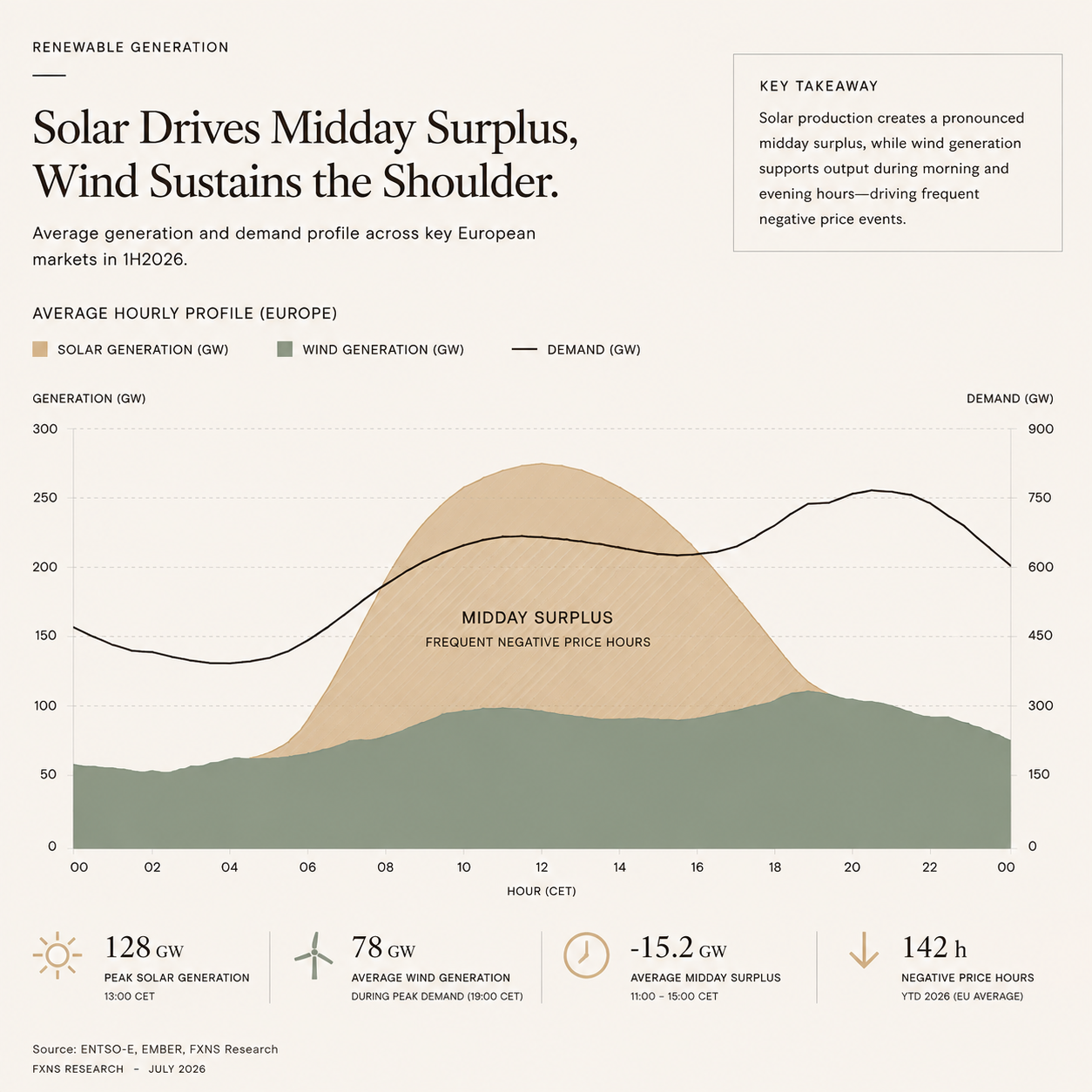
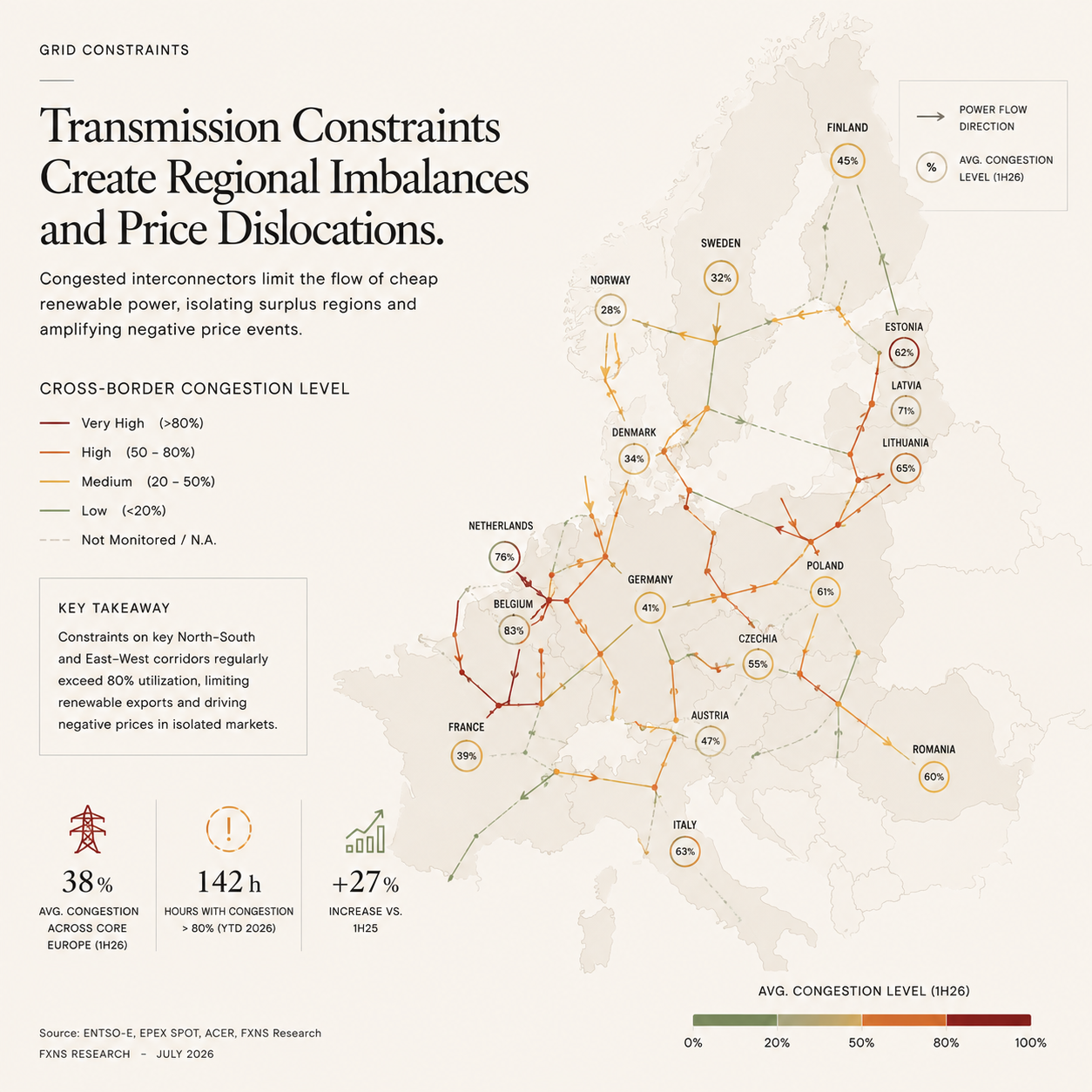
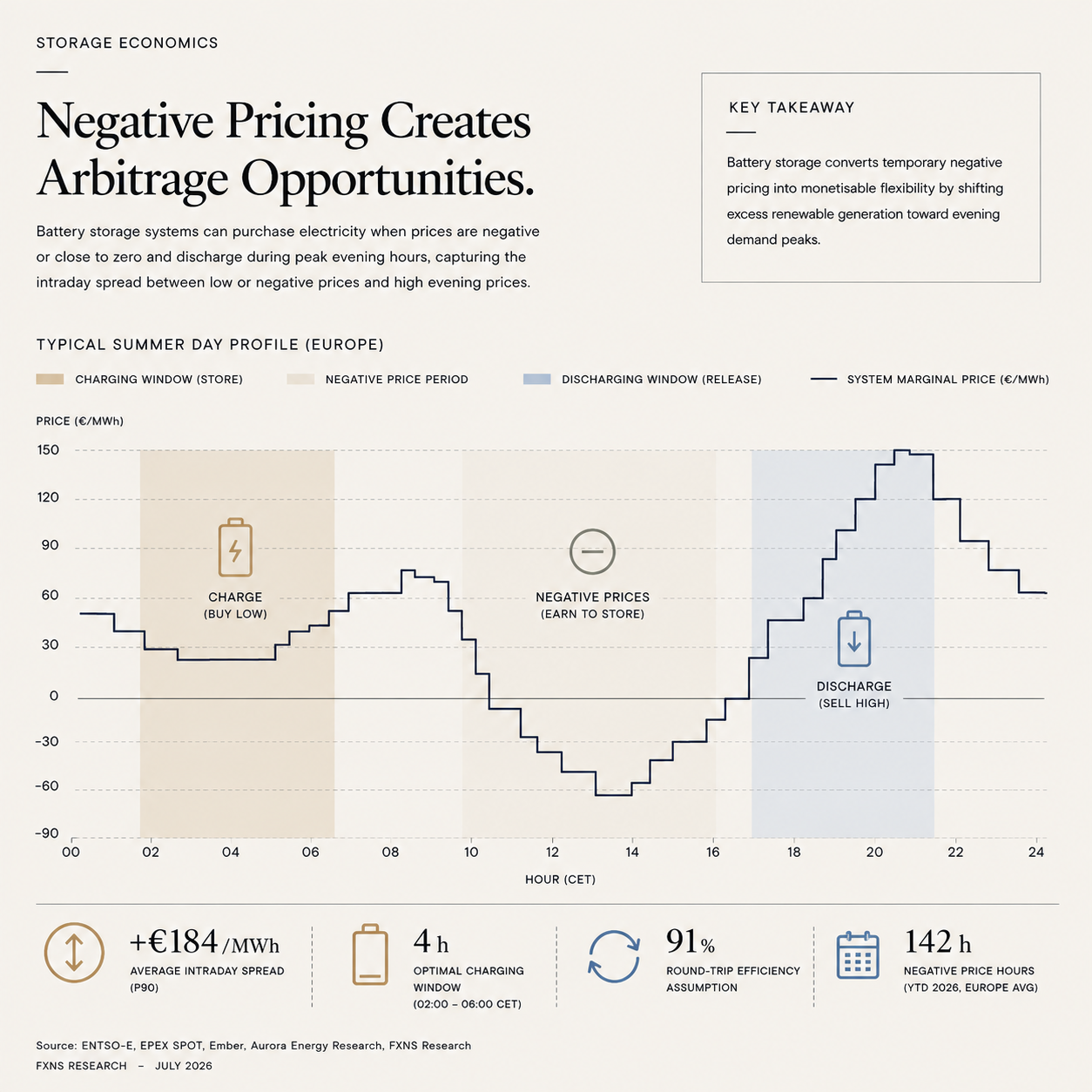
Rather than representing temporary market dislocations, these events increasingly reveal the growing mismatch between renewable generation and system flexibility. As solar and wind capacity continue to expand at an unprecedented pace, electricity supply is becoming more variable while demand remains comparatively rigid and transmission infrastructure struggles to redistribute excess generation efficiently. The result is a growing number of periods during which producers are effectively willing to pay to keep electricity flowing through the grid, highlighting the economic consequences of an increasingly constrained power system.
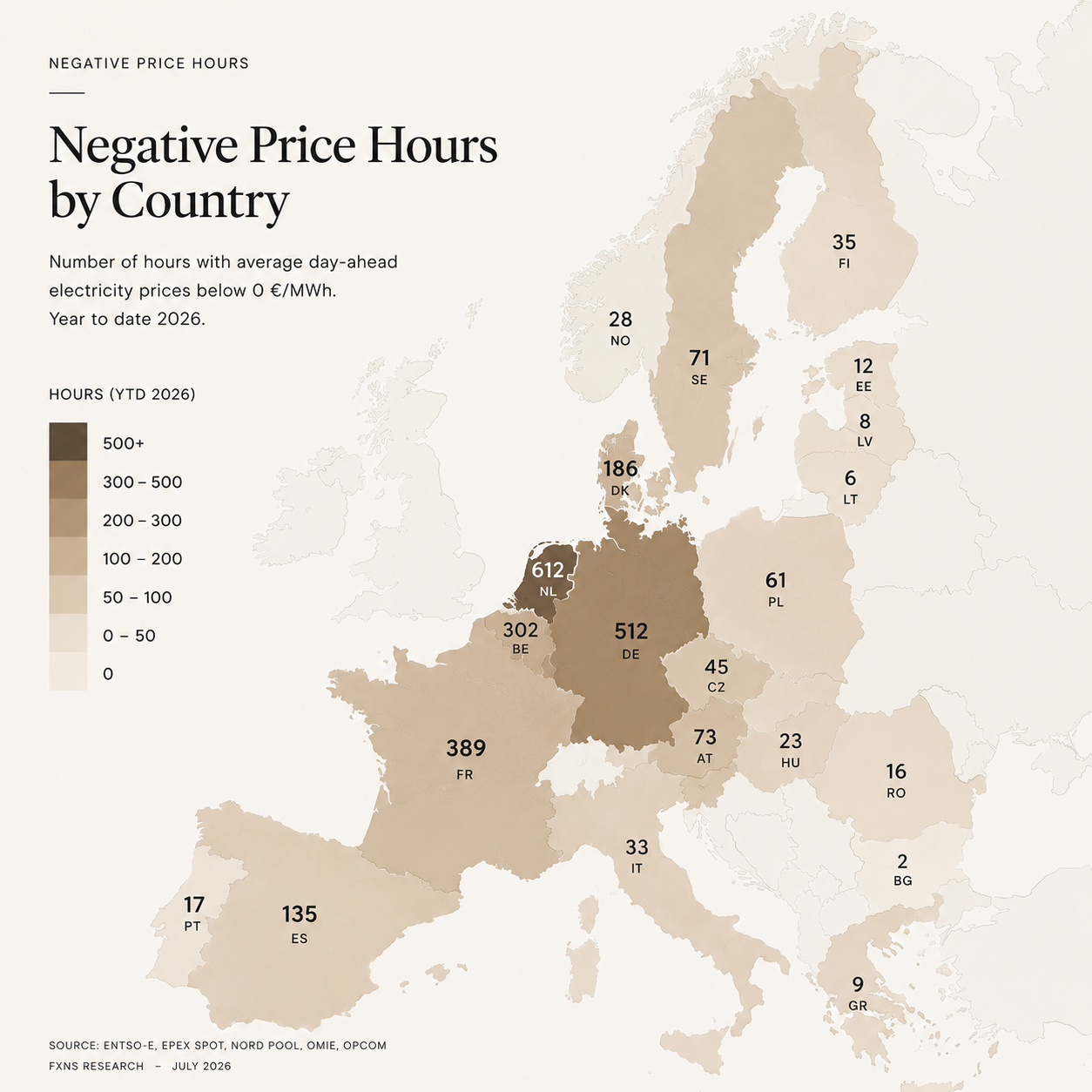
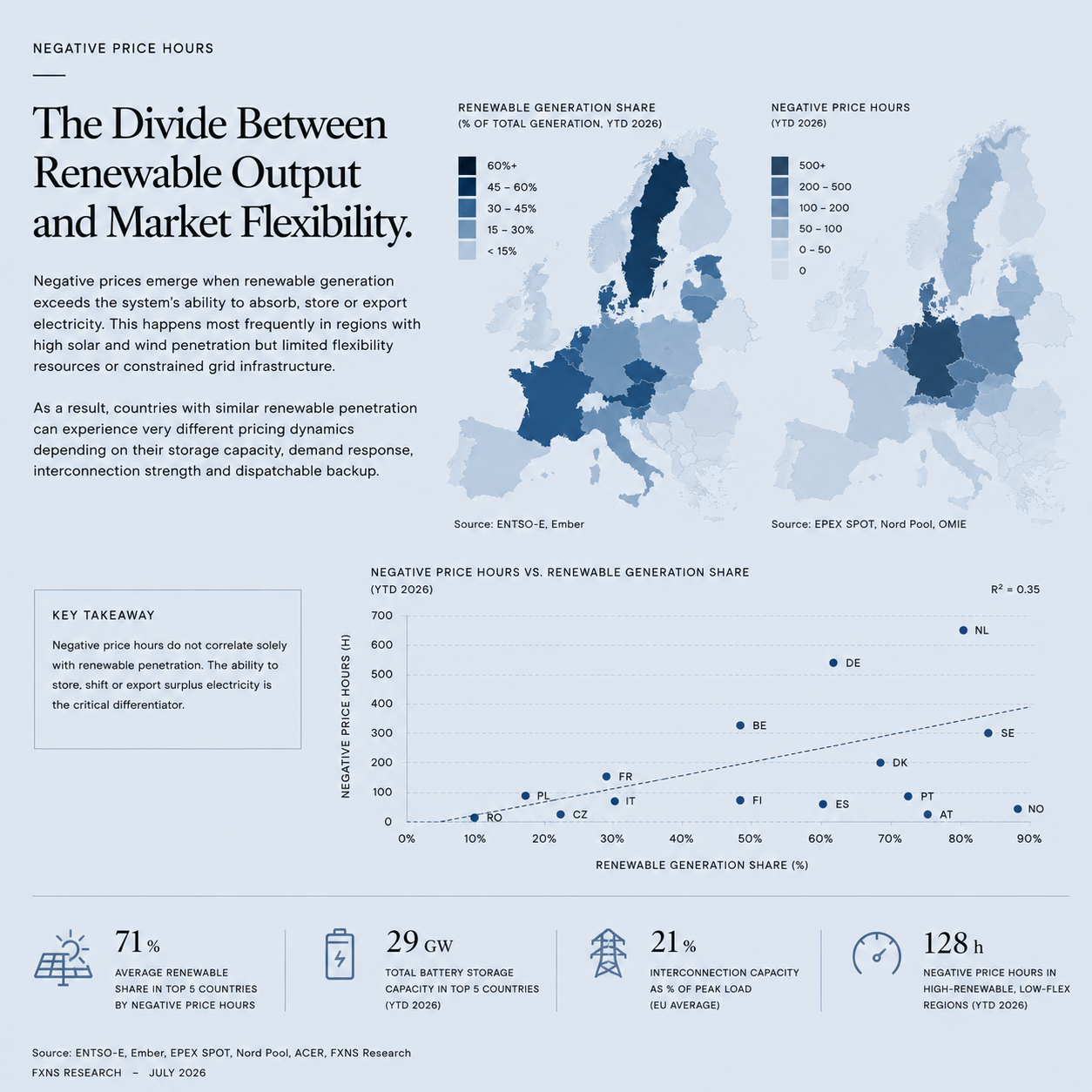
While negative pricing is often associated with periods of exceptional renewable output, the phenomenon cannot be explained by generation alone. Its distribution across Europe reflects the interaction between local production, transmission capacity, cross-border interconnections and the ability of each power system to absorb or store surplus electricity. As a result, neighbouring countries with similar renewable penetration can experience remarkably different pricing dynamics depending on the flexibility of their infrastructure.
Identifying these regional differences is essential to distinguish temporary market imbalances from structural bottlenecks. Mapping where negative price events persist over time provides valuable insight into the parts of the European grid where future investment in storage, transmission and flexible generation is likely to become increasingly important.
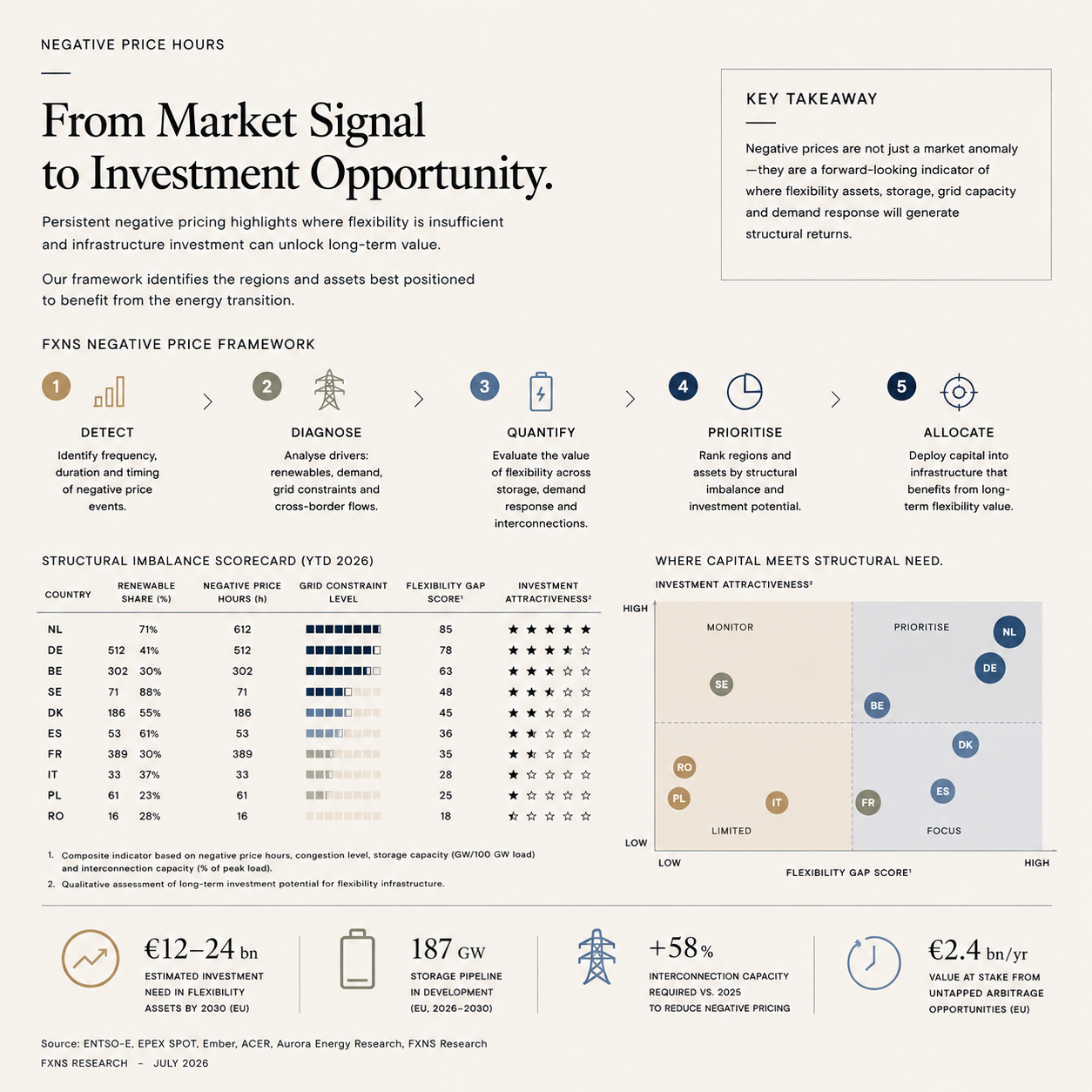
Persistent negative pricing is gradually redefining the economics of the European electricity system. What initially appeared as an occasional consequence of renewable expansion has evolved into a structural market signal that reveals where flexibility is insufficient and where capital is likely to earn the highest long-term returns. Rather than viewing negative prices as isolated anomalies, they should be interpreted as measurable indicators of imbalance between generation, transmission, storage and demand response.
From an investment perspective, this framework shifts the focus away from electricity prices alone toward the infrastructure capable of restoring equilibrium. Battery storage, grid reinforcement, flexible generation, demand-side management and interconnection capacity become increasingly valuable as renewable penetration accelerates. The objective is therefore not simply to identify where negative prices occur today, but to anticipate how the market will adapt as flexibility assets are deployed across Europe.
By combining market microstructure, physical grid constraints and renewable production profiles into a unified analytical framework, the research identifies the regions where structural imbalances are likely to persist and where capital allocation can benefit from long-duration secular trends rather than short-term price volatility. This approach transforms negative pricing from a market curiosity into a systematic indicator for infrastructure investment, strategic asset allocation and long-term thematic positioning.